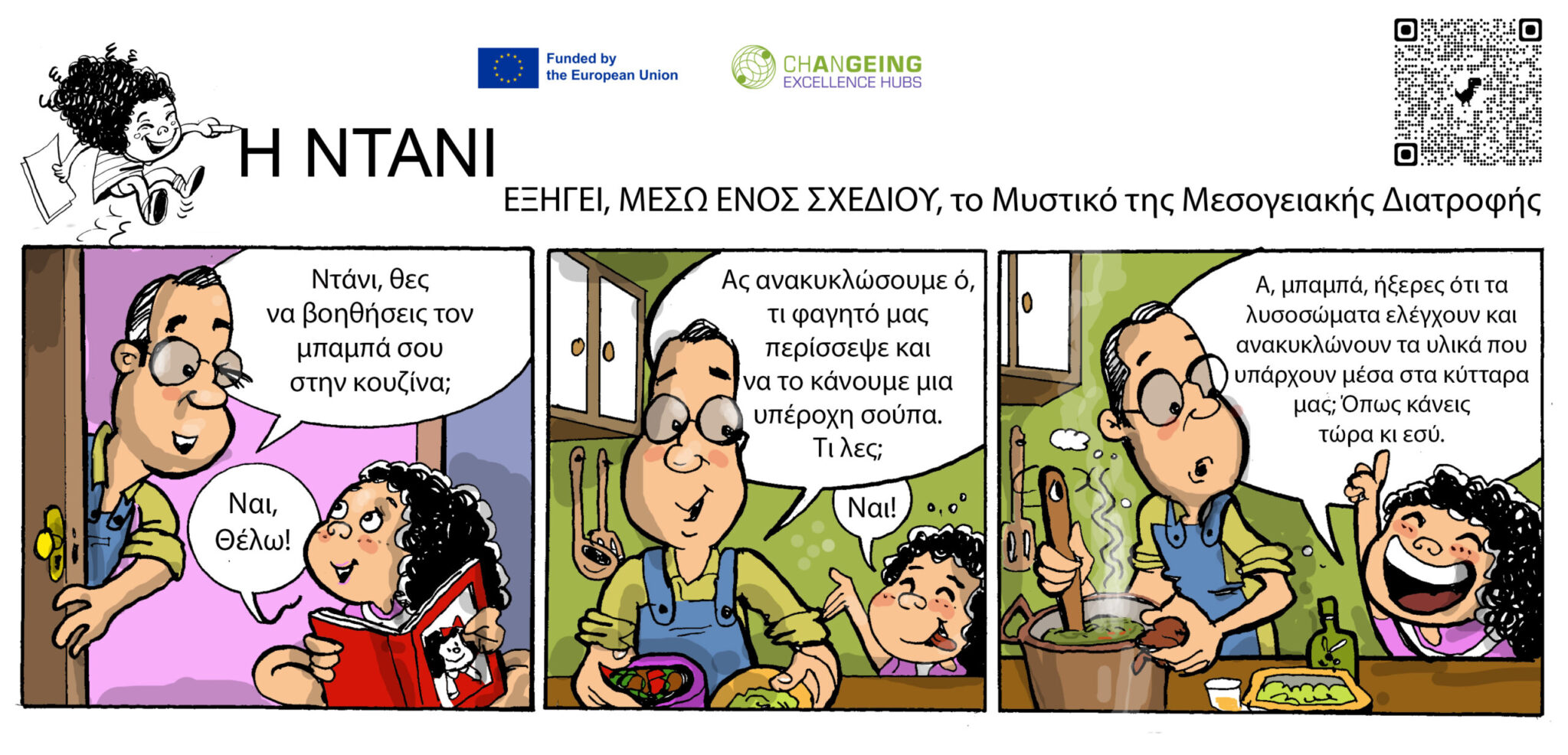
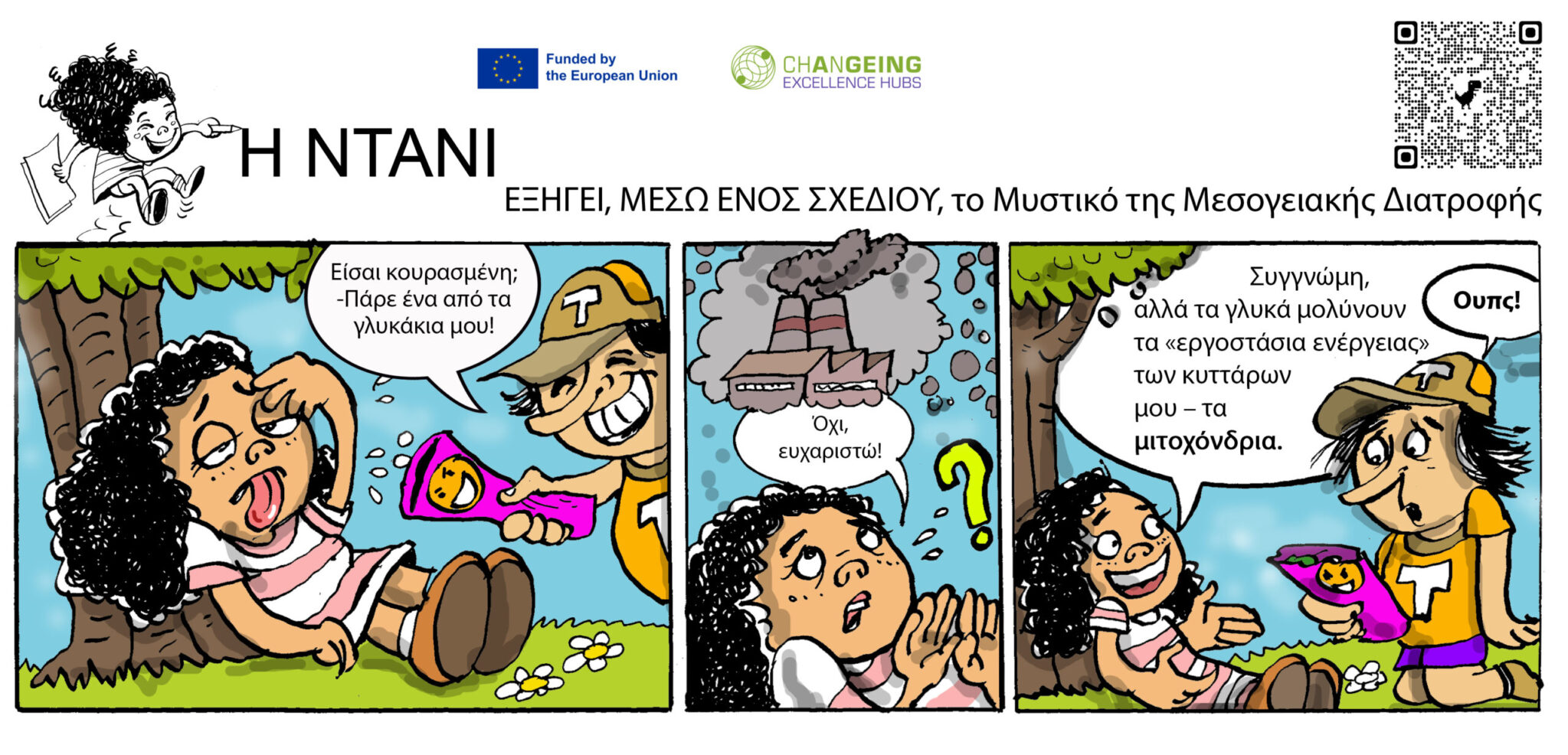
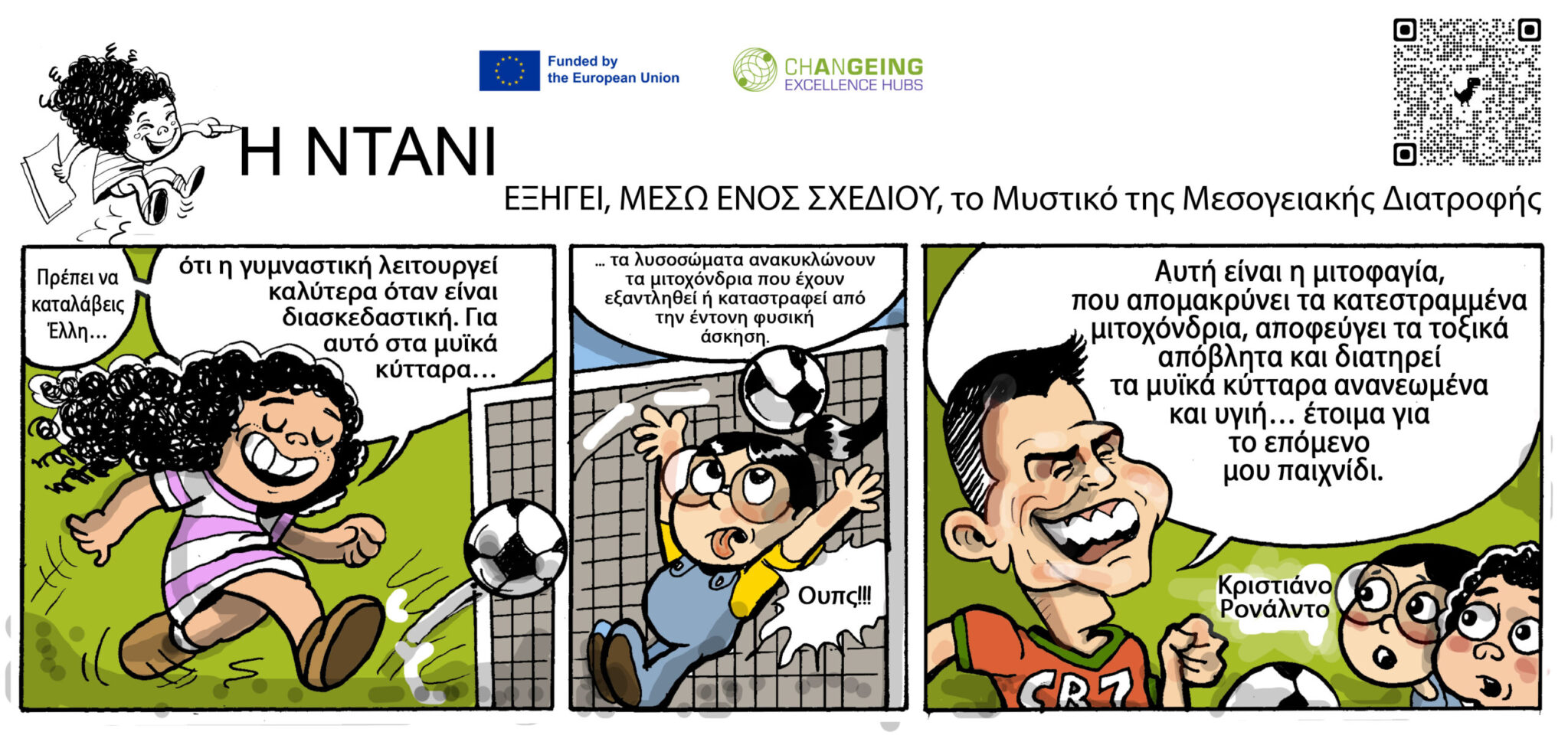
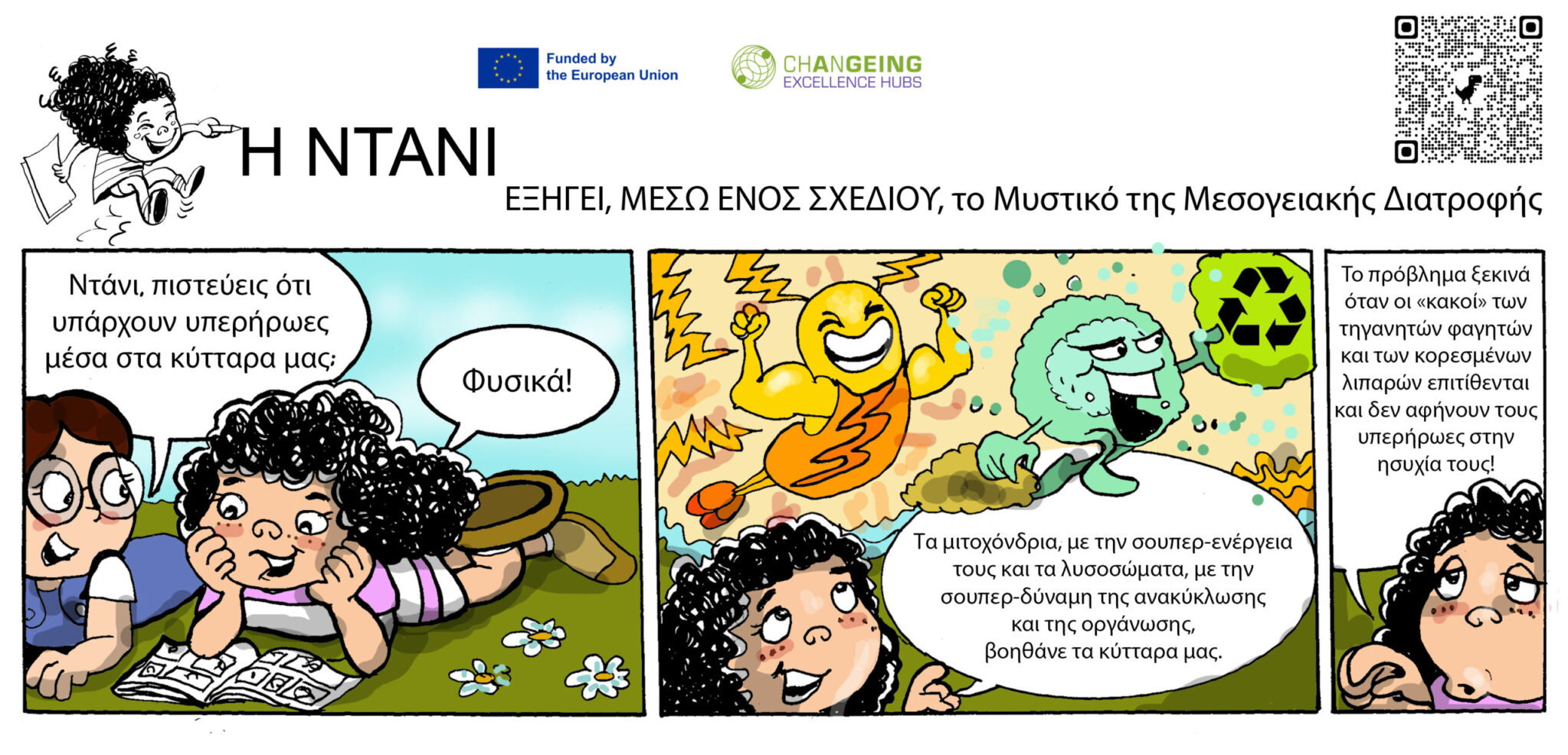
Within each of us, there is a universe of billions of cells. Each cell is an active, complex unit where life happens. Inside every cell, work is constant, and its balance depends on the collaboration between two essential structures (organelles): mitochondria act as power plants, generating the energy necessary for the cell to function; lysosomes are a recycling center that also serves as a logistics hub, detecting the inventory of some important compounds, and when they obtain them by digesting cellular “trash,” they deliver them to other cellular structures that need these compounds.
For a long time, science studied these two structures in isolation, each with its own specific function. However, as in any complex system, the health of our cells depends on the communication and synchrony between these two components. Recently, science revealed that the balance between mitochondria and lysosomes is fundamental to our vitality (1). When this coordination fails, it can lead to serious problems, including the development of diseases such as Parkinson’s disease and Alzheimer’s disease.
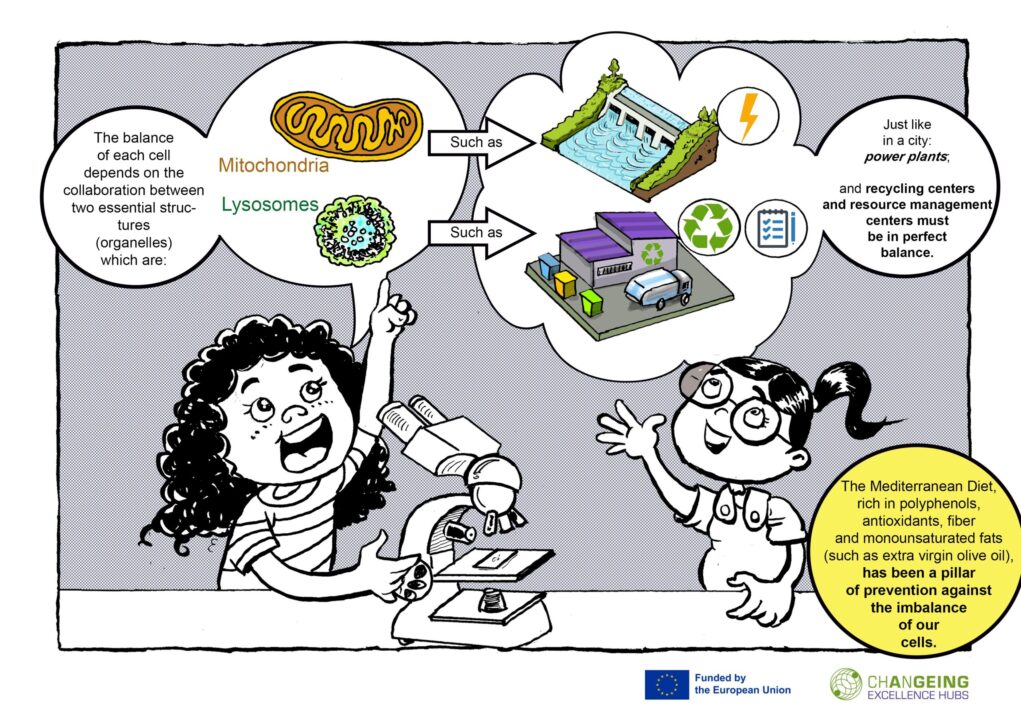
It is at this point of vital interdependence that the Mediterranean Diet comes into play. It is not just nutrition, but the ace up the sleeve that optimizes cellular infrastructure. The Mediterranean Diet provides increased capacity for infrastructure maintenance. Rich in polyphenols, antioxidants, fiber, and monounsaturated fats (such as extra virgin olive oil), this diet has been linked to improving the performance of mitochondrial power plants and strengthening the lysosomal recycling system. It is a cornerstone of prevention against age-related decline (2).
Imagine the mitochondrion (3) as the cell’s power plant, the furnace that transforms nutrients extracted from food into the vital fuel that allows the cell to function. Its structure, with folded inner membranes, resembles a complex architecture, optimized to capture and convert energy into ATP, the currency of life. Every movement, every thought, every memory, is powered by this energy.
The mitochondrion does not operate in isolation. Mitochondria belong to the cell’s large ecosystem, and their performance is dynamic: the power plants can fuse or divide, forming a complex network that adjusts to the energy needs of the cellular city.
In this scenario, the Mediterranean Diet (2) acts as an essential tonic for this power plant:
In the interstices of the city, the lysosome (6) operates with a different, but equally vital, intention. It is the recycling system and the guardian of cleanliness. Equipped with powerful enzymes, tiny biological “detergents,” the lysosome collects worn-out parts, damaged structures, and waste. With mastery, it transforms them into new materials, ready to be reused by the cell.
This process, autophagy (which means “self-eating”), is the cell’s way of renewing itself, of shedding the past to ensure the future. Without the lysosome, the cellular city would be suffocated by debris. The accumulation of waste would impede the flow of life, and the cell’s vitality would gradually be choked. Its function is the capacity to clean up what is not needed in order to renew and grow.
The role of the Mediterranean Diet (2) in lysosomal function (6) is crucial, albeit indirect:
The great secret revealed by science is that these two structures are not neighboring strangers (1). They move towards each other, meeting at contact points where their work becomes a “silent dialogue,” an exchange of information and energy. Mitochondria and lysosomes are interdependent partners, united by an invisible web of communication that is the pillar of cellular health. Harmony in this partnership is the guarantee of a long and healthy life for the cell.
It is at this point of contact that the cellular fate is sealed. The success of this coordination determines whether the cell lives in prosperity or enters a state of gradual decline, senescence (7).
As the years pass, just like the infrastructure of an aging city, the system can become less efficient. Time, genetics, or the environment can cause the dialogue to break down. Recent scientific research data shows that in neurodegenerative diseases, such as Parkinson’s disease and Alzheimer’s disease, the melody of life is going out of tune (1).
The loss of coordination between these two partners is not just a symptom; it is the very essence of these diseases. This internal failure, this imbalance in our cellular architecture, is now a central focus of research (1, 6, 7).
The discovery of this intimate and vital partnership brings new hope. Instead of focusing on just one of the organelles, science is now looking at the relationship, the workflow. The goal is not just to strengthen the mitochondrion or energize the lysosome, but to re-establish the dialogue between them (1).
In this search to restore the fluidity of the system, the Mediterranean Diet (2) emerges as a powerful intervention. By reducing oxidative stress and inflammation, and by supporting mitochondrial efficiency, it acts preventively, protecting the essential communication. It is a profound reminder that our health, and the health of our brain, are a reflection of a silent harmony that happens at a level we can barely imagine. Aging is not an inevitable destination, but a discoordination that science is trying to correct, often looking to ancestral patterns of life, like the Mediterranean diet, to guide our next steps.
Authors: Catarina Mendes and Nuno Raimundo
Design: José Gomes
Text: António Piedade
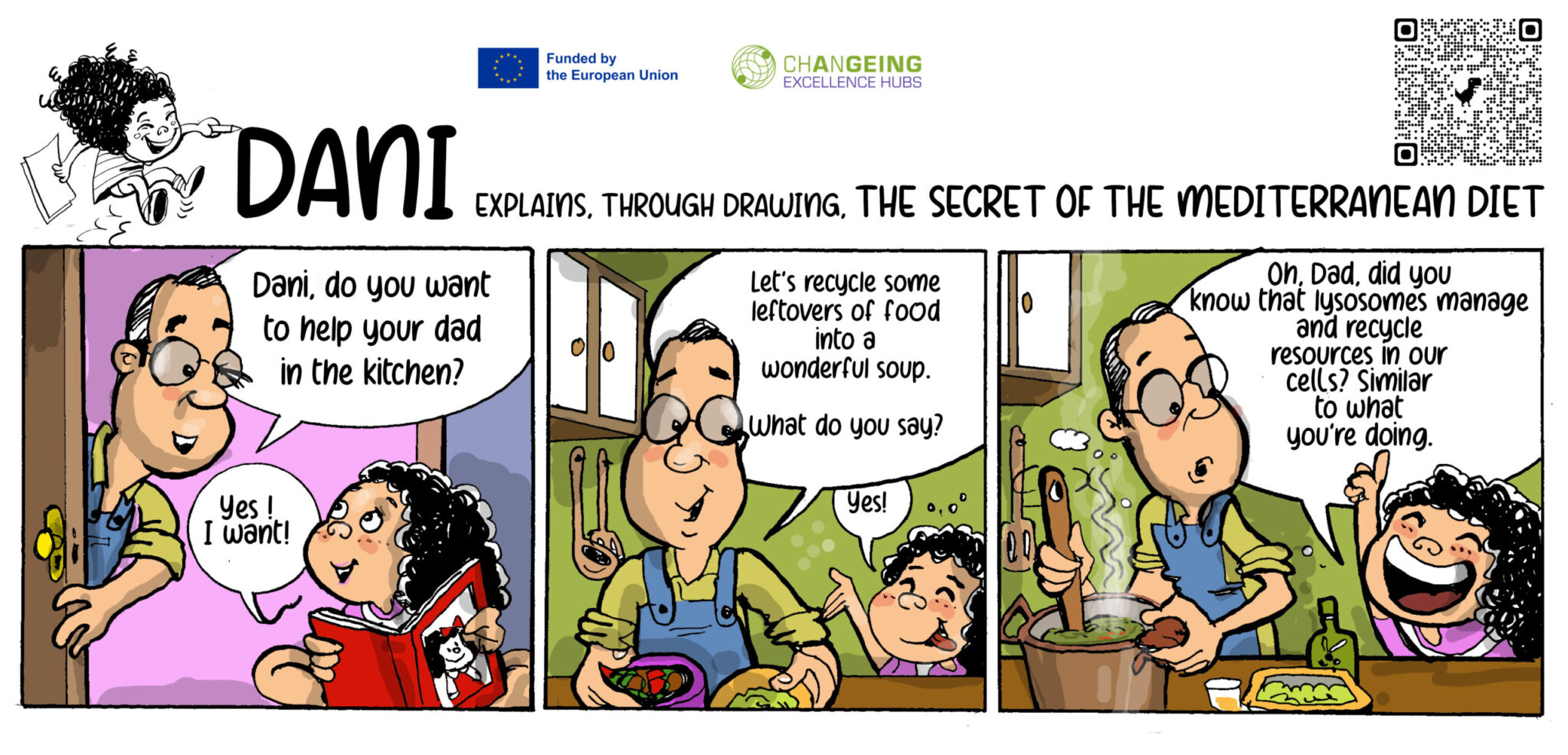


Dentro de cada um de nós existe um universo de biliões de células. Cada célula é uma unidade ativa e complexa onde a vida acontece. Dentro de cada célula, o trabalho é constante e o seu equilíbrio depende da colaboração entre duas estruturas essenciais (organelos): as mitocôndrias, atuam como centrais elétricas, gerando a energia necessária para o funcionamento da célula; os lisossomas, são um centro de reciclagem que também serve de central logística, pois detetam o inventário de alguns compostos importantes, e quando os obtêm por digestão de “lixo” celular, entregam-nos a outras estruturas celulares que precisam desses compostos
Durante muito tempo, a ciência estudou estas duas estruturas de forma isolada, cada uma com a sua função própria. No entanto, tal como num sistema complexo, a saúde das nossas células depende da comunicação e da sincronia entre estes dois componentes.
Recentemente, a ciência revelou que o equilíbrio entre mitocôndrias e lisossomas é fundamental para a nossa vitalidade (1). Quando esta coordenação falha, pode levar a problemas graves, incluindo o desenvolvimento de doenças como a doença de Parkinson e a doença de Alzheimer.
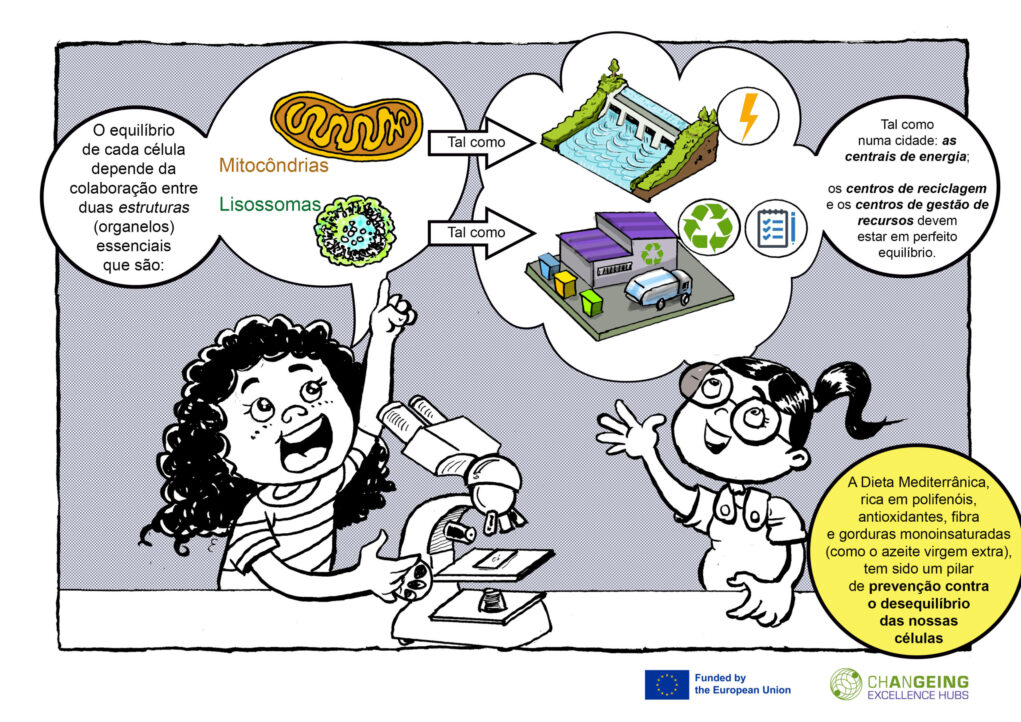
É neste ponto de interdependência vital que a Dieta Mediterrânica entra em cena. Não é apenas nutrição, mas sim o trunfo que otimiza a infraestrutura celular. A Dieta Mediterrânica confere mais capacidades de manutenção das infraestruturas. Rica em polifenóis, antioxidantes, fibra e gorduras monoinsaturadas (como o azeite virgem extra), esta dieta tem sido ligada à melhoria do desempenho das centrais elétricas mitocondriais e ao fortalecimento do sistema de reciclagem lisossomal. É um pilar de prevenção contra o declínio associado à idade (2).
Imagine a mitocôndria (3) como a central elétrica da célula, a fornalha que transforma os nutrientes extraídos dos alimentos no combustível vital que permite à célula funcionar. A sua estrutura, com membranas internas dobradas, assemelha-se a uma arquitetura complexa, otimizada para capturar e converter energia em ATP, a moeda de troca da vida. Cada movimento, cada reflexão, cada memória, é alimentado por esta energia.
A mitocôndria não opera isolada. As mitocôndrias pertencem ao grande ecossistema da célula, e o seu desempenho é dinâmico: as centrais podem fundir-se ou dividir-se, formando uma rede complexa que se ajusta às necessidades energéticas da cidade celular.
Neste cenário, a Dieta Mediterrânica (2) funciona como um tónico essencial para esta central elétrica:
No interstício da cidade, o lisossoma (6) opera com uma intenção diferente, mas igualmente vital. É o sistema de reciclagem e o guardião da limpeza. Equipado com enzimas potentes, pequenos “detergentes” biológicos, o lisossoma recolhe peças desgastadas, estruturas danificadas e resíduos. Com mestria, transforma-os em novos materiais, prontos a serem reutilizados pela célula.
Este processo, a autofagia (que significa “comer-se a si mesmo”), é a forma de a célula se renovar, de se livrar do passado para garantir o futuro. Sem o lisossoma, a cidade celular ficaria sufocada pelo entulho. A acumulação de lixo impediria o fluxo da vida, e a vitalidade da célula seria gradualmente asfixiada. A sua função é a capacidade de limpar o que não serve para se renovar e crescer.
O papel da Dieta Mediterrânica (2) na função lisossomal (6) é crucial, embora indireto:
O grande segredo revelado pela ciência é que estas duas estruturas não são vizinhas que se ignoram (1). Elas movem-se uma em direção à outra, encontrando-se em pontos de contacto onde o seu trabalho se torna um “diálogo silencioso”, uma troca de informação e energia. As mitocôndrias e os lisossomas são parceiros interdependentes, unidos por uma teia invisível de comunicação que é o pilar da saúde celular. A harmonia nesta parceria é a garantia de uma vida longa e saudável para a célula.
É neste ponto de contacto que o destino celular é selado. O sucesso desta coordenação determina se a célula vive em prosperidade ou entra num estado de declínio gradual, a senescência (7).
Com o passar dos anos, tal como nas infraestruturas de uma cidade envelhecida, o sistema pode tornar-se menos eficiente. O tempo, a genética ou o ambiente podem fazer com que o diálogo se quebre. Dados recentes da investigação científica mostra que em doenças neurodegenerativas, como a doença de Parkinson e a doença de Alzheimer, a melodia da vida está a desafinar (1).
A perda de coordenação entre estes dois parceiros não é apenas um sintoma; é a própria essência destas doenças. Esta falha interna, este desequilíbrio na nossa arquitetura celular, é hoje um foco central de investigação (1, 6, 7).
A descoberta desta parceria íntima e vital traz uma nova esperança. Em vez de nos concentrarmos em apenas um dos organelos, a ciência olha agora para a relação, para o fluxo de trabalho. O objetivo não é apenas fortalecer a mitocôndria ou energizar o lisossoma, mas restabelecer o diálogo entre eles (1).
Nesta busca por restaurar a fluidez do sistema, a dieta mediterrânica (2) emerge como uma intervenção poderosa. Ao reduzir o stress oxidativo e a inflamação, e ao apoiar a eficiência da mitocôndria, ela atua preventivamente, protegendo a comunicação essencial. É uma lembrança profunda de que a nossa saúde, e a saúde do nosso cérebro, são um reflexo de uma harmonia silenciosa que acontece a um nível que mal podemos imaginar. O envelhecimento não é um destino inevitável, mas uma descoordenação que a ciência está a tentar corrigir, muitas vezes olhando para os padrões ancestrais de vida, como a dieta mediterrânica, para guiar os nossos próximos passos.
Autores: Catarina Mendes e Nuno Raimundo
Ilustrações: José Gomes
Text:o António Piedade
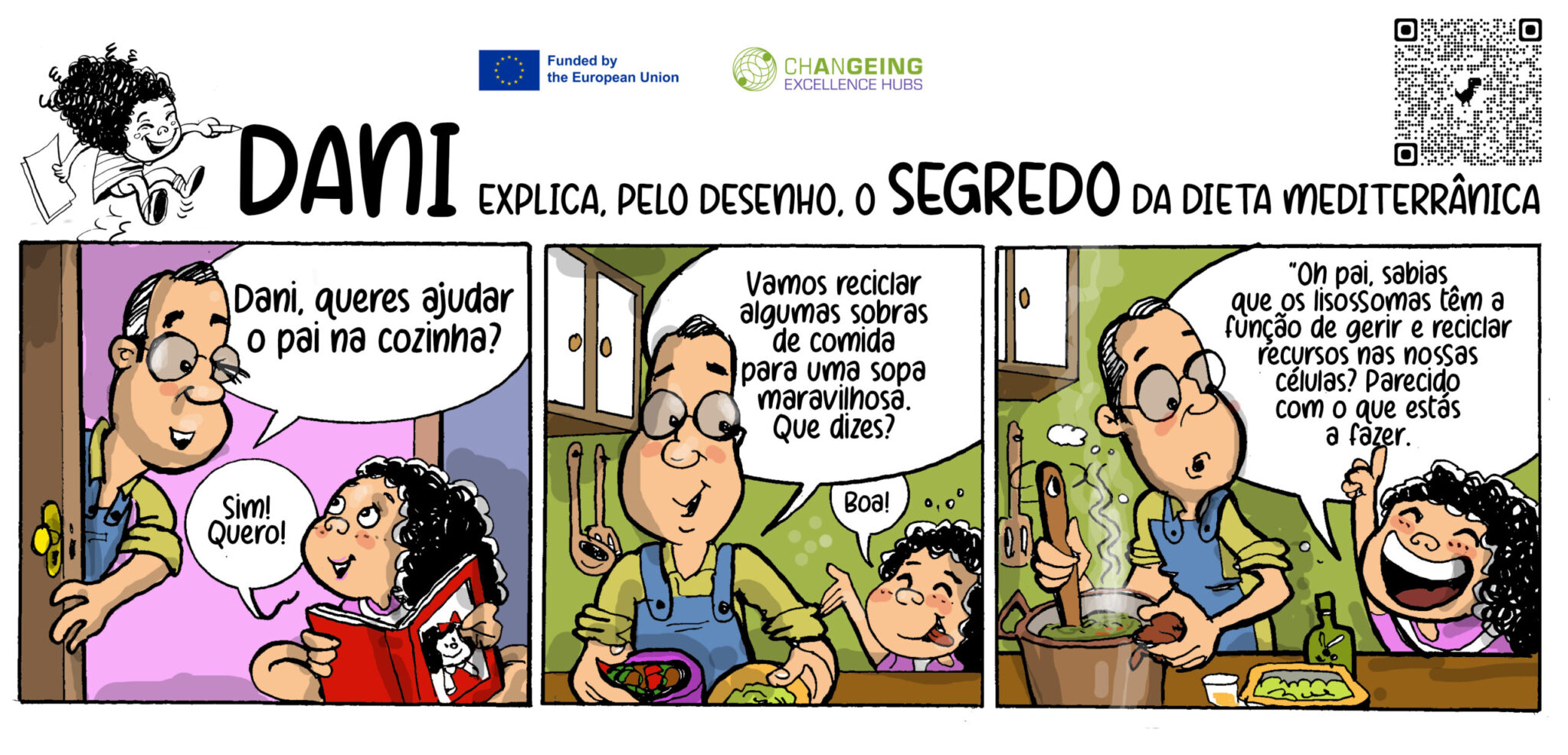


Μέσα σε καθέναν από εμάς, υπάρχει ένα σύμπαν δισεκατομμυρίων κυττάρων. Κάθε κύτταρο αποτελεί μια ενεργή και πολύπλοκη μονάδα όπου εξελίσσεται η ζωή. Στο εσωτερικό του, οι διεργασίες είναι συνεχείς και η ισορροπία του εξαρτάται από τη συνεργασία δύο βασικών δομών (οργανιδίων): των μιτοχονδρίων, που λειτουργούν ως εργοστάσια παραγωγής ενέργειας, προσφέροντας στο κύτταρο την ενέργεια που απαιτείται για τις λειτουργίες του και των λυσοσωμάτων, που αποτελούν ένα κέντρο ανακύκλωσης και ταυτόχρονα κόμβο διαχείρισης. Τα λυσοσώματα ανιχνεύουν τα αποθέματα ορισμένων σημαντικών ενώσεων, και όταν τις αποκτούν μέσω της πέψης των κυτταρικών «απορριμμάτων», τις διανέμουν σε άλλες κυτταρικές δομές που τις χρειάζονται.
Για μεγάλο χρονικό διάστημα, οι επιστήμονες μελετούσαν αυτές τις δύο δομές μεμονωμένα, καθεμία για τη δική της εξειδικευμένη λειτουργία. Ωστόσο, όπως συμβαίνει σε κάθε πολύπλοκο σύστημα, έτσι και στα κύτταρά μας, η καλή τους κατάσταση εξαρτάται από την επικοινωνία και τον συγχρονισμόανάμεσα στα δύο αυτά οργανίδια. Πρόσφατες μελέτες αποκάλυψαν ότι η ισορροπία μεταξύ μιτοχονδρίων και λυσοσωμάτων είναι θεμελιώδης για τη ζωτικότητά μας (1). Όταν αυτή η ισορροπία διαταράσσεται, μπορεί να προκύψουν σοβαρά προβλήματα, συμπεριλαμβανομένης της εμφάνισης νευροεκφυλιστικών ασθενειών όπως η νόσος του Πάρκινσον και η νόσος του Αλτσχάιμερ.
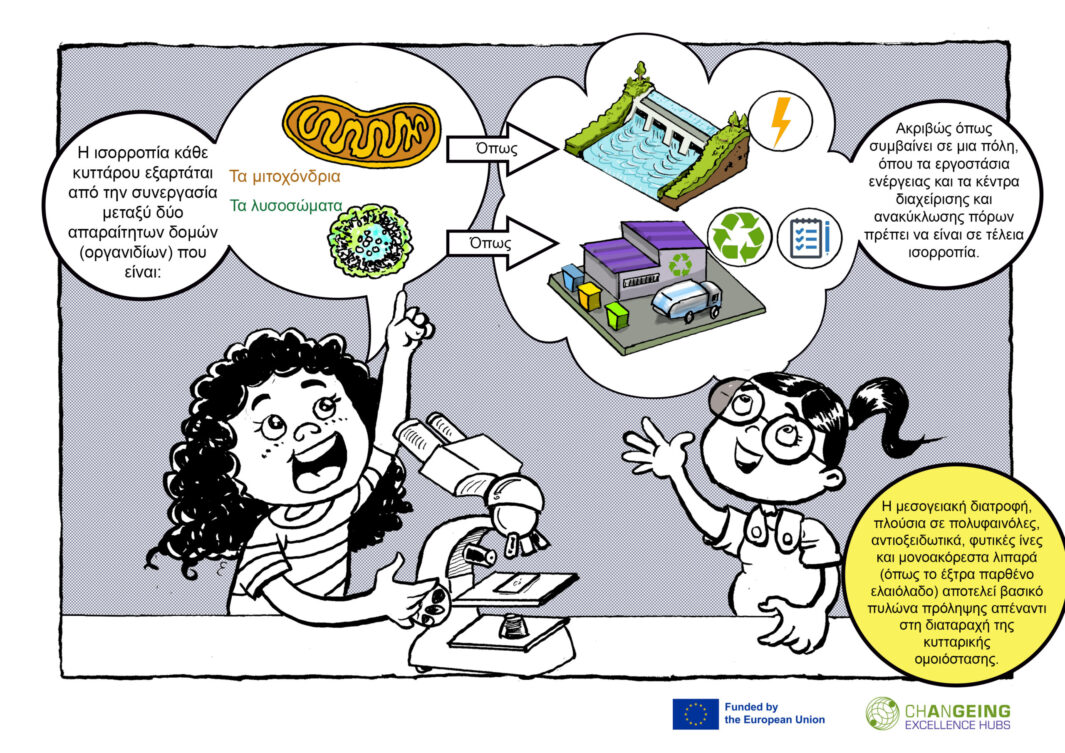
Σε αυτό ακριβώς το σημείο, όπου η λειτουργική αλληλεπίδραση των κυτταρικών συστημάτων καθίσταται καθοριστική, έρχεται στο προσκήνιο η Μεσογειακή Διατροφή. Δεν πρόκειται απλώς για έναν τρόπο διατροφής, αλλά για έναν άσο στο μανίκι που βελτιστοποιεί την κυτταρική υποδομή. Η Μεσογειακή Διατροφή ενισχύει την ικανότητα του οργανισμού να συντηρεί τα κυτταρικά του συστήματα. Πλούσια σε πολυφαινόλες, αντιοξειδωτικά, φυτικές ίνες και μονοακόρεστα λιπαρά (όπως το εξαιρετικό παρθένο ελαιόλαδο), αυτή η διατροφή έχει συσχετιστεί με τη βελτίωση της λειτουργίας των μιτοχονδριακών εργοστασίων ενέργειας και την ενίσχυση του λυσοσωμικού συστήματος ανακύκλωσης. Αποτελεί ακρογωνιαίο λίθο στην πρόληψη της φθοράς που σχετίζεται με τη γήρανση (2).
Φανταστείτε το μιτοχόνδριο (3) ως το εργοστάσιο παραγωγής ενέργειας του κυττάρου, τον «κλίβανο» που μετατρέπει τα θρεπτικά συστατικά της τροφής σε καύσιμο ζωτικής σημασίας, που επιτρέπει στο κύτταρο να λειτουργεί. Η δομή του, με τις πτυχωτές εσωτερικές μεμβράνες, εμφανίζει πολύπλοκη αρχιτεκτονική, ειδικά διαμορφωμένη για τη σύλληψη και μετατροπή της ενέργειας σε ATP, το νόμισμα της ζωής. Κάθε κίνηση, κάθε σκέψη, κάθε μνήμη τροφοδοτείται από αυτή την ενέργεια.
Το μιτοχόνδριο δεν λειτουργεί απομονωμένα. Τα μιτοχόνδρια ανήκουν στο ευρύτερο κυτταρικό οικοσύστημα, και η λειτουργία τους είναι δυναμική: μπορούν να συγχωνεύονται ή να διαιρούνται, δημιουργώντας ένα πολύπλοκο δίκτυο που προσαρμόζεται στις ενεργειακές ανάγκες της κυτταρικής πόλης.
Σε αυτό το πλαίσιο, η Μεσογειακή Διατροφή (2) δρα ως καθοριστικός ενισχυτικός παράγοντας για το εργοστάσιο ενέργειας, προσφέροντας:
Μέσα στην κυτταρική πόλη, το λυσόσωμα (6) λειτουργεί με ένα διαφορετικό σκοπό, εξίσου ζωτικής σημασίας. Αποτελεί το σύστημα ανακύκλωσης και το «φύλακα» της κυτταρικής καθαρότητας. Το λυσόσωμα, εξοπλισμένο με ισχυρά ένζυμα, μικροσκοπικά βιολογικά «απορρυπαντικά», συλλέγει φθαρμένα μέρη, κατεστραμμένες δομές και απόβλητα και με ακρίβεια, τα μετατρέπει σε νέα υλικά, έτοιμα να επαναχρησιμοποιηθούν από το κύτταρο.
Αυτή η διαδικασία, γνωστή ως αυτοφαγία (που σημαίνει «αυτο-κατανάλωση»), είναι ο τρόπος με τον οποίο το κύτταρο ανανεώνεται, αποβάλλοντας το παρελθόν προκειμένου να διασφαλίσει το μέλλον. Χωρίς το λυσόσωμα, η κυτταρική πόλη θα ασφυκτιούσε από τα υπολείμματα. Η συσσώρευση αποβλήτων θα εμπόδιζε τη ροή της ζωής και σταδιακά η ζωτικότητα του κυττάρου θα μειωνόταν. Η λειτουργία του έγκειται στην ικανότητά του να απομακρύνει ό,τι δεν είναι πλέον απαραίτητο, ώστε να επιτρέπεται η ανανέωση και η ανάπτυξη.
Ο ρόλος της Μεσογειακής Διατροφής (2) στη λειτουργία του λυσοσώματος (6) είναι καθοριστικός, αν και έμμεσος:
Tο μεγάλο μυστικό που έχει αναδείξει η επιστήμη είναι ότι αυτές οι δύο αυτές δομές δεν λειτουργούν όπως δύο «άγνωστοι» μεταξύ τους, γείτονες (1). Κινούνται η μία προς την άλλη και συναντώνται σε σημεία επαφής, όπου το έργο τους μετατρέπεται σε μια μορφή «σιωπηλής επικοινωνίας», μια ανταλλαγή πληροφοριών και ενέργειας. Τα μιτοχόνδρια και τα λυσοσώματα αποτελούν αλληλοεξαρτώμενους συνεργάτες, ενωμένους μέσω ενός αόρατου δικτύου επικοινωνίας που αποτελεί τον πυλώνα της κυτταρικής υγείας. Η αρμονία στη συνεργασία αυτή είναι εγγύηση για μια μακρά και υγιή κυτταρική ζωή.
Σε αυτό το σημείο επαφής καθορίζεται η μοίρα του κυττάρου. Η επιτυχία αυτού του συντονισμού καθορίζει αν το κύτταρο θα ζήσει σε ευημερία ή θα εισέλθει σε μια διαδικασία σταδιακής φθοράς, την κυτταρική γήρανση(senescence) (7).
Η απορρύθμιση του νου: Όταν το σύστημα καταρρέει
Καθώς περνούν τα χρόνια, όπως ακριβώς συμβαίνει με τις υποδομές μιας πόλης που γερνά, το σύστημα γίνεται σταδιακά λιγότερο αποτελεσματικό. Ο χρόνος, η γενετική προδιάθεση ή οι περιβαλλοντικοί παράγοντες μπορούν να διαταράξουν αυτή την επικοινωνία. Πρόσφατα επιστημονικά δεδομένα δείχνουν ότι σε νευροεκφυλιστικές ασθένειες, όπως η νόσος του Πάρκινσον και η νόσος του Αλτσχάιμερ, η «μελωδία της ζωής» αρχίζει να χάνει το ρυθμό της(1).
Η απώλεια συντονισμού μεταξύ αυτών των δύο συνεργατών δεν είναι απλώς ένα σύμπτωμα· αποτελεί την ίδια την ουσία αυτών των ασθενειών. Αυτή η εσωτερική αποτυχία, αυτή η ανισορροπία στην κυτταρική μας αρχιτεκτονική, βρίσκεται πλέον στο επίκεντρο της σύγχρονης έρευνας (1, 6, 7).
Η ανακάλυψη αυτής της στενής και ζωτικής σημασίας συνεργασίας φέρνει νέα ελπίδα. Αντί να επικεντρώνεται μόνο σε ένα από τα οργανίδια, η επιστημονική έρευνα στρέφεται πλέον στη σχέση τους και στη λειτουργική συνεργασία τους. Ο στόχος δεν είναι απλώς να ενισχυθεί το μιτοχόνδριο ή να ενεργοποιηθεί το λυσόσωμα, αλλά να αποκατασταθεί η επικοινωνία μεταξύ τους (1).
Σε αυτή την προσπάθεια αποκατάστασης της ρευστότητας του συστήματος, η Μεσογειακή Διατροφή (2) αναδεικνύεται ως μια ισχυρή παρέμβαση. Μειώνοντας το οξειδωτικό στρες και τη φλεγμονή και ενισχύοντας την αποδοτικότητα των μιτοχονδρίων, δρα προληπτικά, προστατεύοντας την απαραίτητη επικοινωνία. Αποτελεί μια ισχυρή υπενθύμιση ότι η υγεία μας, και ιδιαίτερα η υγεία του εγκεφάλου μας, αντικατοπτρίζει μια σιωπηλή αρμονία που εκτυλίσσεται σε ένα επίπεδο που δύσκολα μπορούμε να φανταστούμε. Η γήρανση δεν αποτελεί αναπόφευκτο προορισμό, αλλά μια κατάσταση αποσυντονισμού που η επιστήμη προσπαθεί να αποκαταστήσει, συχνά αναζητώντας καθοδήγηση σε παραδοσιακά πρότυπα ζωής, όπως η Μεσογειακή διατροφή, για να καθοδηγήσει τα επόμενα μας βήματα.
Συγγραφείς: Catarina Mendes και Nuno Raimundo
Σχεδιασμός: José Gomes
Κείμενο: António Piedade