We often think of ourselves as isolated individuals, but modern biology reveals a different reality: we are, in fact, walking ecosystems. Inside our digestive tract resides a vibrant community of trillions of microorganisms known as the gut microbiota (1). This “forgotten organ” weighs about two kilograms and contains more genes (the microbiome) than our own human cells. Today, we know that the balance of this microscopic universe is the key to a resilient body and a sound mind and, consequently, a longer and healthier life.
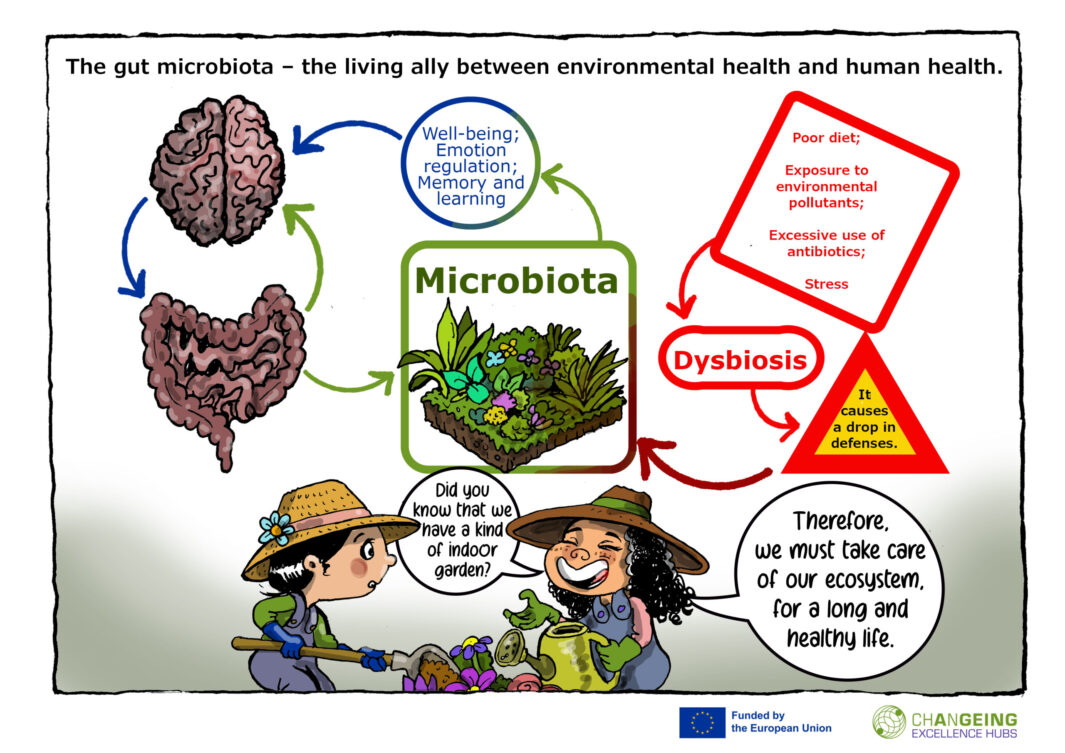
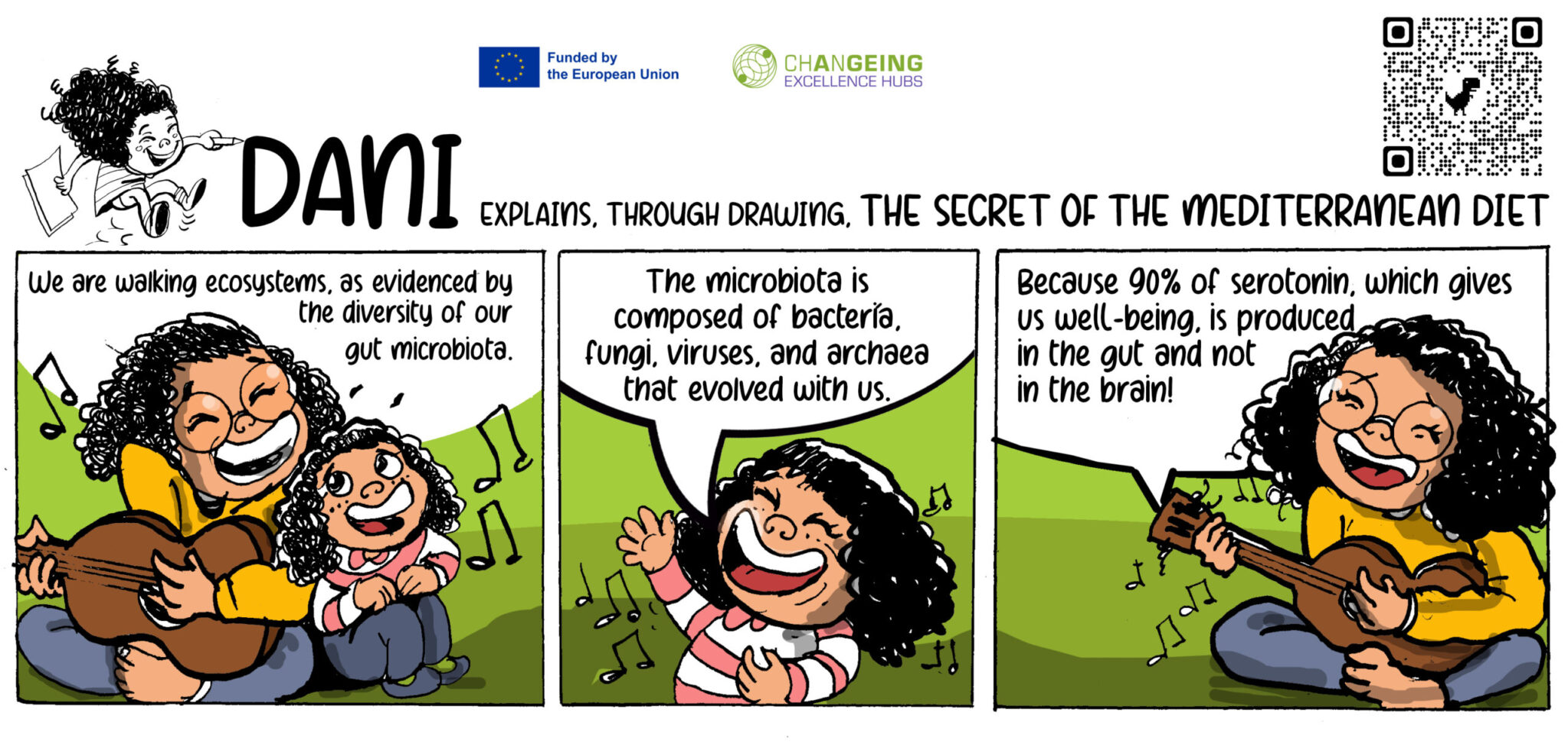
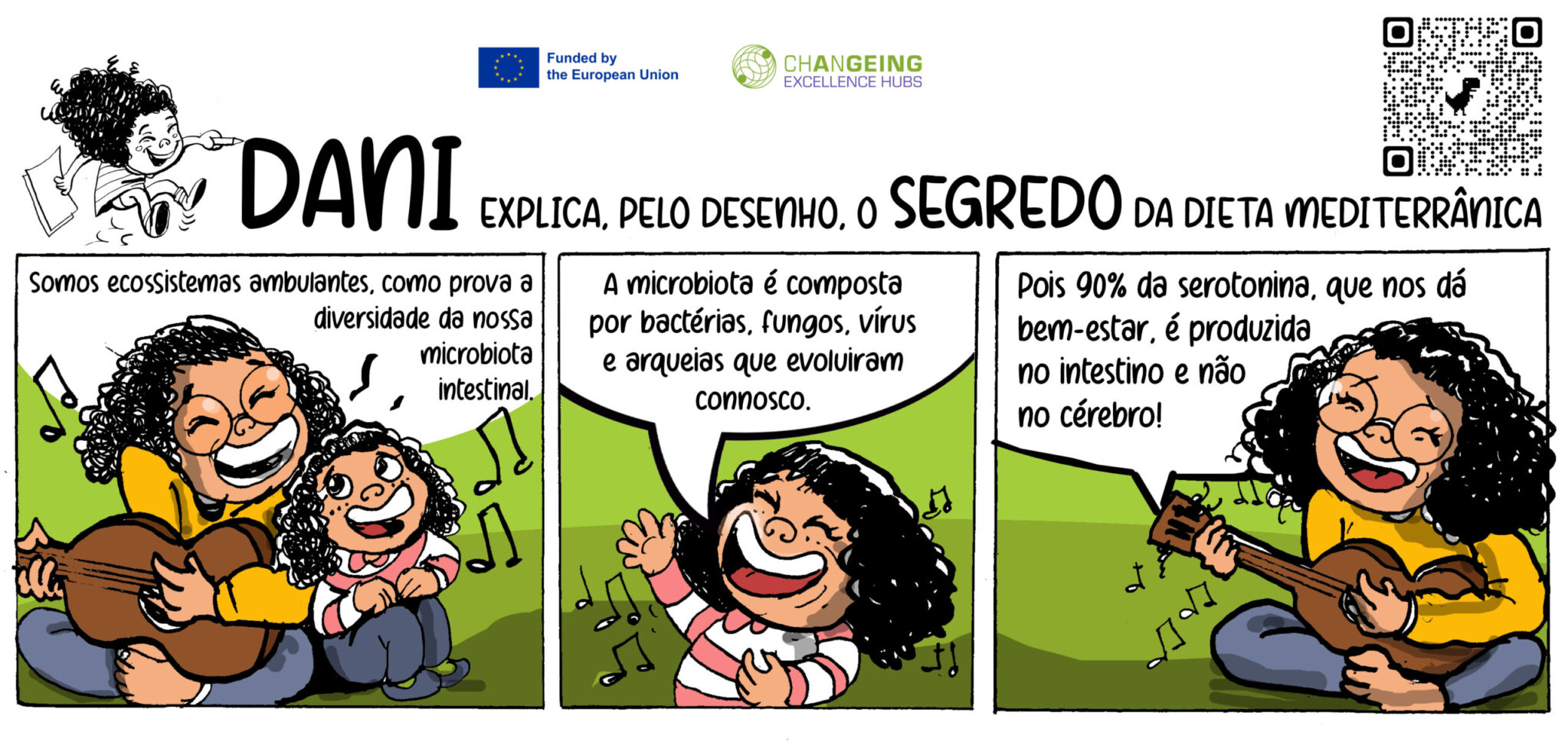
The human microbiota is composed of bacteria, fungi, viruses, and archaea that have co-evolved with us over millennia (2). Far from being invading germs, these microorganisms are metabolic partners. They perform functions that human tissues simply cannot, such as digesting complex fibers and synthesizing essential vitamins (like Vitamin K and B-complex vitamins), while also contributing to energy harvest and the regulation of our immune system (3).
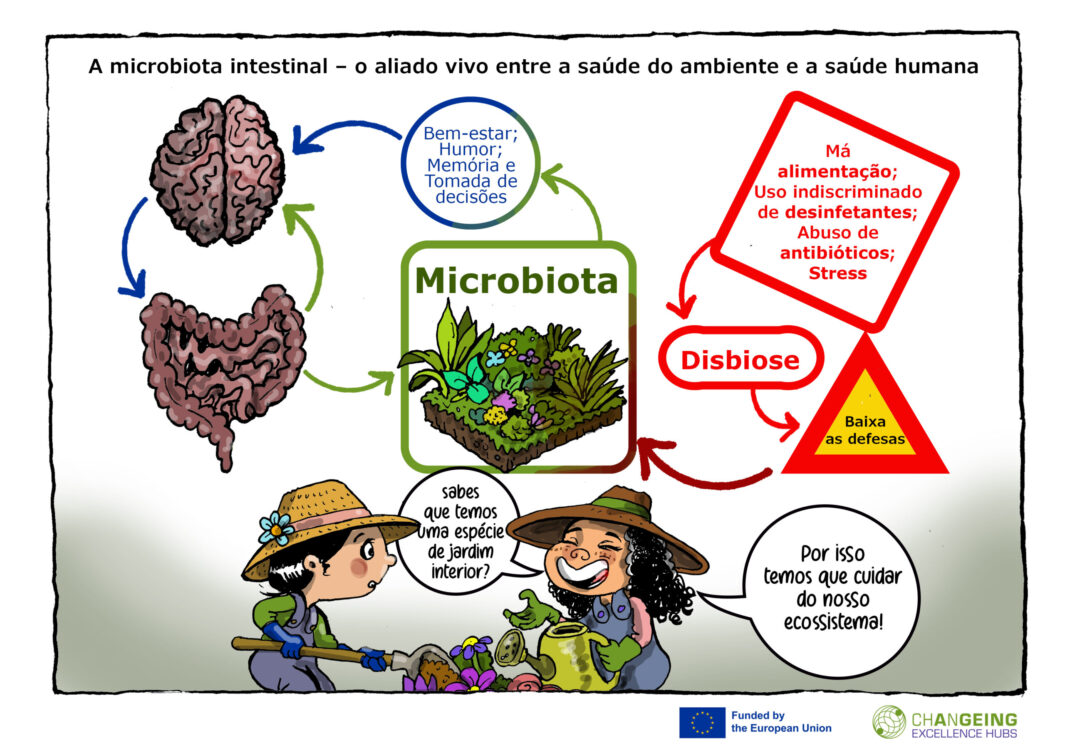
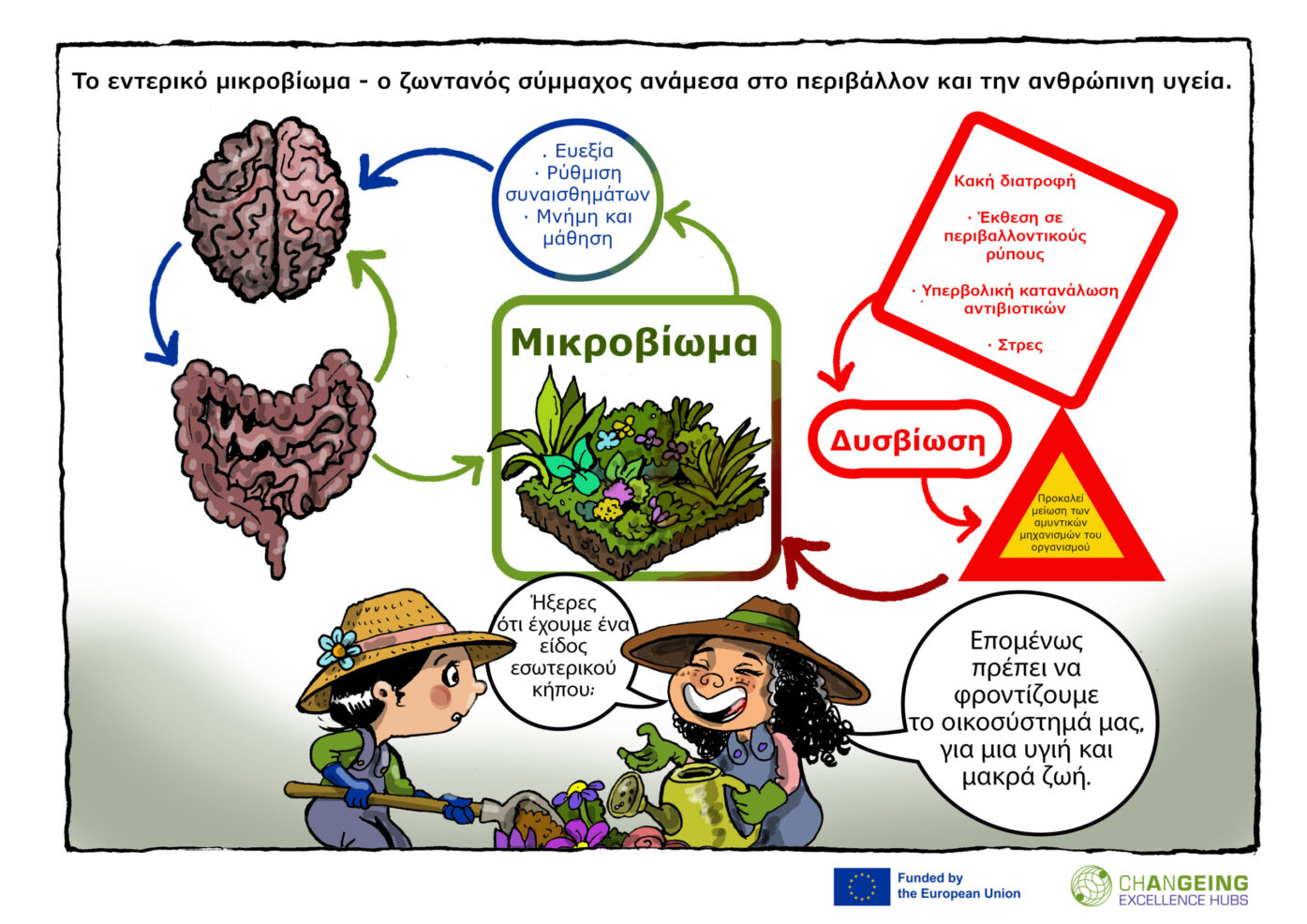
A healthy microbiota (eubiotic) is characterized by diversity. The higher the quality and variety of different “good” bacteria (symbionts), the more resilient our organism becomes. When this balance is disrupted—with an increase in “bad” bacteria (pathobionts)—we reach a state of imbalance called dysbiosis. In this state, defenses weaken, opening the door to chronic inflammation, the common foundation of many modern diseases.
There is constant, bidirectional communication between the gut and the central nervous system. This dialogue occurs through the vagus nerve, the immune system, and the production of chemical substances released into the bloodstream (4).
Did you know that about 90% of serotonin, the “well-being” neurotransmitter, is produced in the gut and not the brain? The microbiota acts as a “chemical factory” that produces messengers capable of influencing our well-being, mood, memory, and decision-making.
Our microbiota is shaped from the first second of life (1,2). The type of birth (vaginal versus C-section) and feeding (breastmilk versus formula) set the foundation. However, the modern environment imposes constant challenges:
The modern Western diet—rich in refined sugars, saturated fats, and ultra-processed foods—”feeds” pathogenic bacteria that promote obesity and inflammation.
In recent decades, we have radically transformed the planet and, by extension, our bodies. Industrialization brought progress, but also a chemical “cocktail” to which we were not accustomed (5).
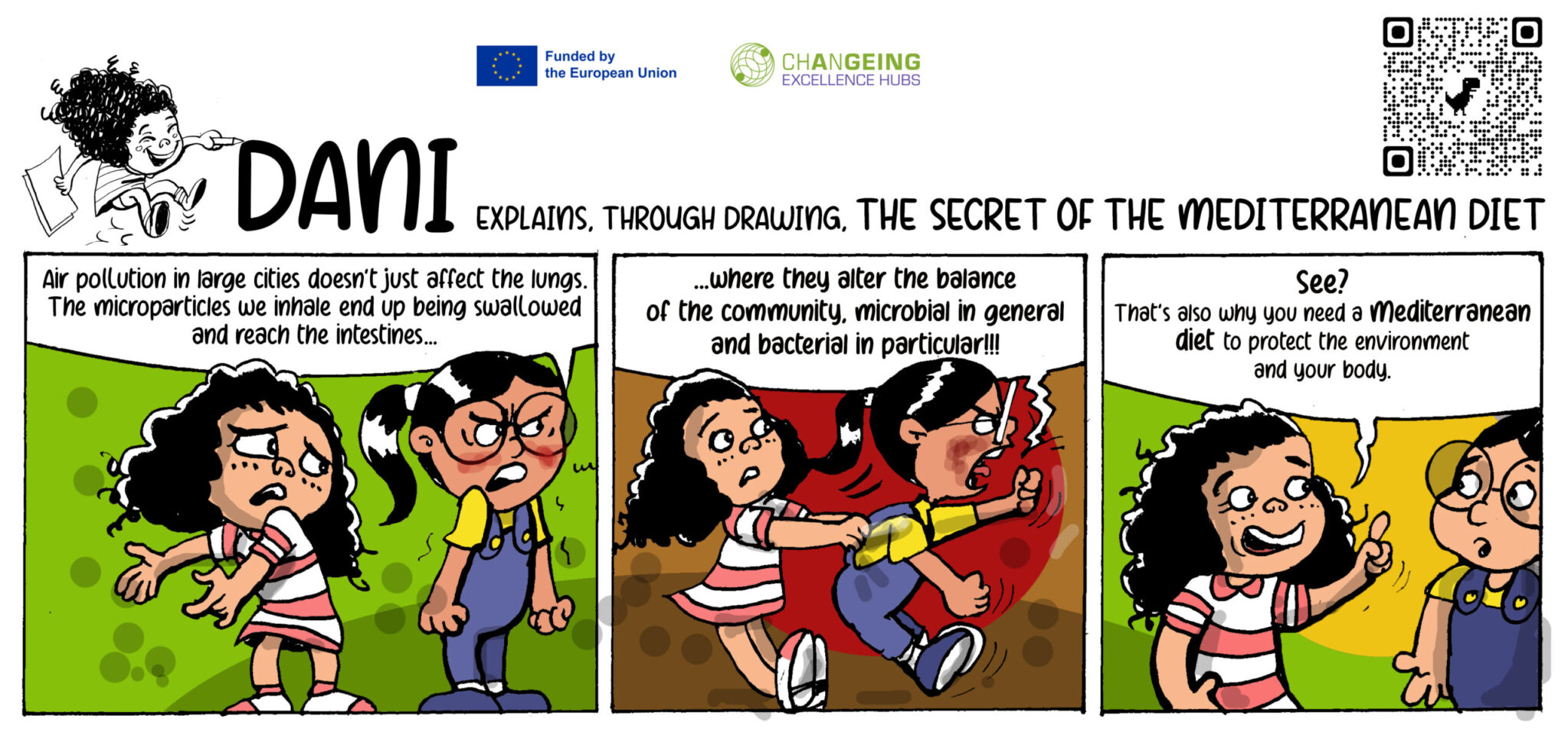
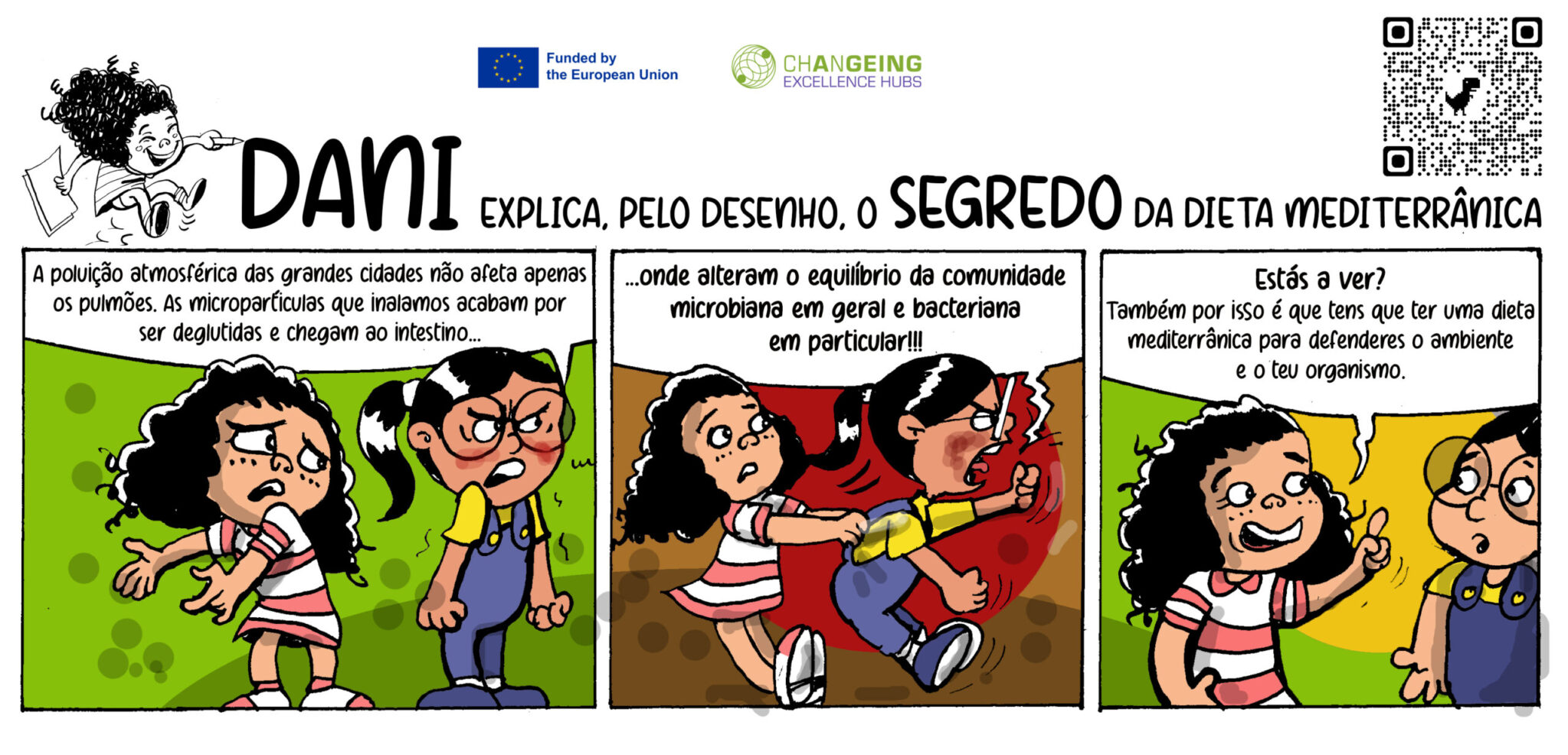
As a consequence of intensive agriculture and the loss of seasonality, the food we eat is produced in haste, often saturated with pesticides and herbicides like glyphosate (6,7). Besides being present on the skins of fruits and vegetables, these chemicals manage to enter our digestive system. Furthermore, air pollution in large cities does not just affect the lungs; the microparticles we inhale end up being swallowed and reach the gut, where they alter the balance of the microbial community in general, and bacteria in particular.
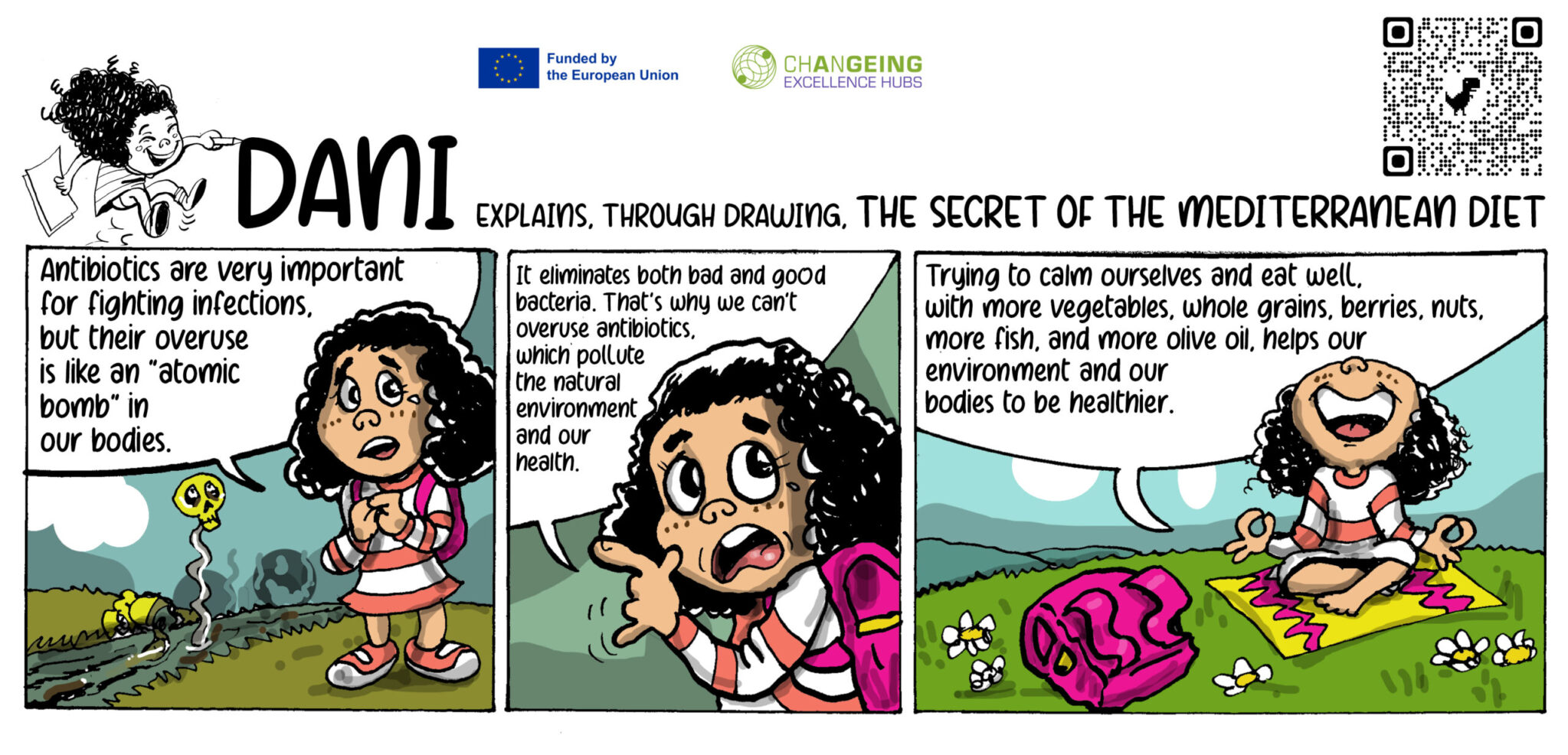
The excessive use of antibiotics, both in medicine and livestock farming, acts as an “atomic bomb” for our inner garden, eliminating not only the bad bacteria but also the good ones essential for the agility of our immunity (8).
In contrast, the Mediterranean Diet emerges in scientific literature as the gold standard for the microbiota. This regimen is not just a diet, but a lifestyle that prioritizes (9):
When the balance permitted by a healthy microbiota is broken, we enter a state of dysbiosis (10). As previously mentioned, imagine your gut as a blooming garden. Dysbiosis happens when the beautiful, healthy flowers die and the “weeds” (pathobionts) begin to grow uncontrollably.
The greatest danger of dysbiosis is the compromise of the intestinal barrier. Our gut has a very thin wall (mucosa) that decides what enters the blood. When this barrier weakens (leaky gut), toxic substances and bacterial fragments enter the bloodstream. The result is not just “tummy discomfort”; it is a silent, chronic inflammation that travels throughout the body, potentially causing:
One of the most promising fields of current research is the relationship between the microbiota and aging. By studying populations that live over 100 years, researchers discovered a common pattern: centenarians possess an extraordinarily diverse and “young” microbiota (11).
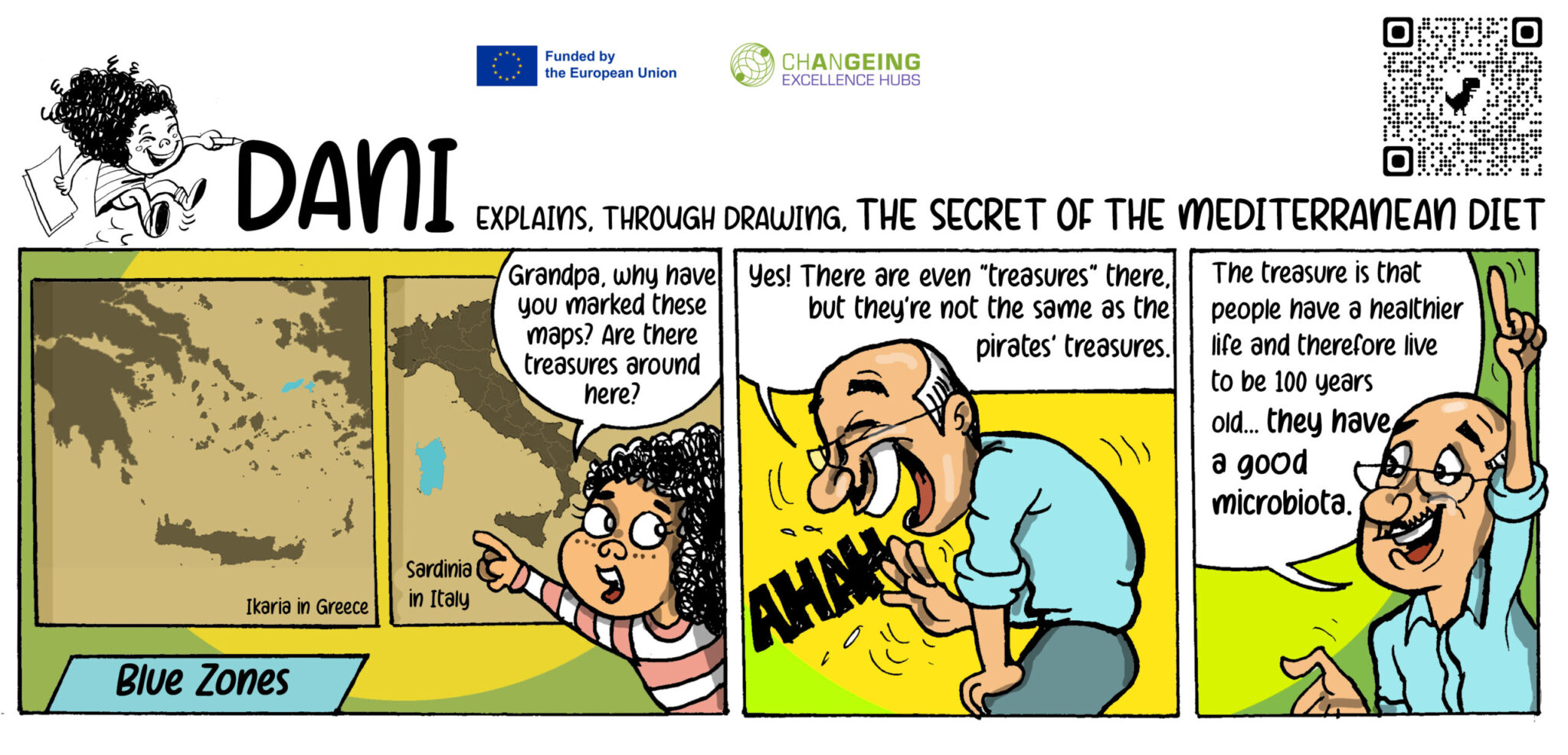
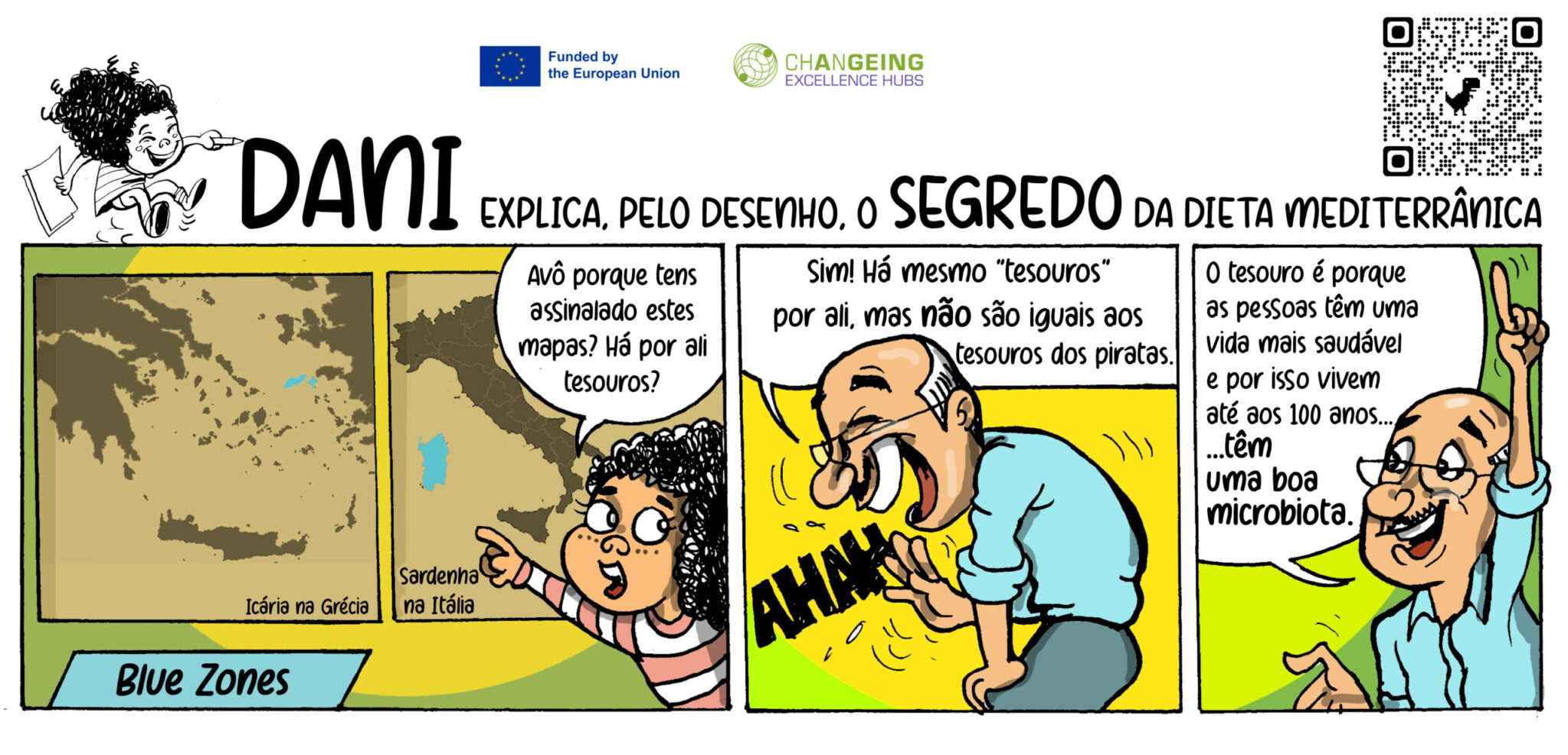
In places known as Blue Zones (such as Sardinia in Italy or Icaria in Greece), people frequently live to 100 with enviable health. What do they have in common? Studies show they have a unique microbiota with a high abundance of bacteria capable of synthesizing beneficial molecules like butyrate, which protects the intestinal barrier and has anti-inflammatory effects. The secret isn’t a magic pill, but a combination of factors:
As we age, it is common for age-related low-grade chronic inflammation (inflammaging) to increase. A balanced microbiota helps combat this process by keeping the intestinal barrier intact and preventing inflammatory agents from accelerating the wear and tear of cells and organs. Taking care of our microbial friends is, therefore, one of the most effective ways to ensure that extra years of life are lived with health, well-being, and intellectual vitality.
Our health depends not only on our genes but also on how we treat the trillions of guests inhabiting our interior. By adopting a diet close to the Mediterranean standard, reducing stress, and maintaining contact with nature, we are cultivating an ecosystem that protects our brain, strengthens our immunity, and paves the way for healthy longevity.
Your gut is listening to you. What will you give it today: a toxin or a seed of longevity?
Authors: Flávio Reis and João Malva
Design: José Gomes
Text: António Piedade
Muitas vezes pensamos em nós próprios como indivíduos isolados, mas a biologia moderna revela uma realidade diferente: somos, na verdade, ecossistemas ambulantes. No interior do nosso trato digestivo, reside uma comunidade vibrante de biliões de microrganismos conhecida como a microbiota intestinal (1). Este “órgão esquecido” pesa cerca de dois quilogramas e contém mais genes (o microbioma) do que as nossas próprias células humanas. Hoje, sabemos que o equilíbrio deste universo microscópico é a chave para um corpo resistente e uma mente sã e, consequentemente, uma vida longa e mais saudável.
A microbiota humana é composta por bactérias, fungos, vírus e arqueias que coevoluíram connosco ao longo de milénios (2). Longe de serem germes invasores, estes microrganismos são parceiros metabólicos. Eles desempenham funções que os tecidos humanos simplesmente não conseguem realizar, como a digestão de fibras complexas e a síntese de vitaminas essenciais (como a K e as do complexo B), e contribuem ainda para a obtenção de energia e a regulação do nosso sistema imunitário. (3)
Uma microbiota saudável (eubiótica) é caracterizada pela diversidade. Quanto maior for a qualidade de diferentes bactérias “boas” (simbiontes), mais resiliente é o nosso organismo. Quando este equilíbrio é desfeito, com aumento da abundância de bactérias “más” (patobiontes), chegamos a um estado de desequilíbrio a que chamamos disbiose, no qual as defesas diminuem, abrindo-se as portas para a inflamação crónica, a base comum a muitas das doenças modernas.
Existe uma comunicação constante e bidirecional entre o intestino e o sistema nervoso central. Este diálogo ocorre através do nervo vago, do sistema imunitário e da produção de substâncias químicas lançadas no sangue (4).
Sabia que cerca de 90% da serotonina, o neurotransmissor do bem-estar, é produzida no intestino e não no cérebro? A microbiota atua como uma “fábrica química” que produz mensageiros capazes de influenciar o nosso bem-estar e humor, a memória e a tomada de decisões.
A nossa microbiota é moldada desde o primeiro segundo de vida (1,2). O tipo de parto (natural versus cesariana) e o aleitamento (materno versus formulado) estabelecem as bases. No entanto, o ambiente moderno impõe desafios constantes:
A dieta ocidental moderna, rica em açúcares refinados, gorduras saturadas e alimentos ultraprocessados, “alimenta” as bactérias patogénicas, que promovem a obesidade e a inflamação.
Nas últimas décadas, transformámos radicalmente o planeta e, por arrasto, o nosso corpo. A industrialização trouxe avanços, mas também um “cocktail” químico ao qual não estávamos habituados. (5)
Como consequência da agricultura intensiva e da perda da sazonalidade, os alimentos que ingerimos são produzidos à pressa, muitas vezes saturados de pesticidas e herbicidas, como o glifosato (6,7). Para além de estarem presentes na casca das frutas e nos legumes, esses químicos conseguem entrar no nosso sistema digestivo. Além disso, a poluição atmosférica das grandes cidades não afeta apenas os pulmões. As micropartículas que inalamos acabam por ser deglutidas e chegam ao intestino, onde alteram o equilíbrio da comunidade microbiana em geral e bacteriana em particular.
O uso excessivo de antibióticos, tanto na medicina como na pecuária, funciona como uma “bomba atómica” para o nosso jardim interior, eliminando não só as bactérias más, mas também as boas, essenciais para a agilidade da nossa imunidade. (8)
Em contrapartida, a Dieta Mediterrânica surge na literatura científica como o padrão-ouro para a microbiota. Este regime não é apenas uma dieta, mas um estilo de vida que privilegia (9):
Quando o equilíbrio permitido pela microbiota saudável é desfeito, entramos num estado de disbiose (10). Como já referimos, imagine o seu intestino como um jardim florido. A disbiose acontece quando as flores belas e saudáveis morrem e as ervas daninhas (os chamados patobiontes) começam a crescer descontroladamente.
O maior perigo da disbiose é o comprometimento da barreira intestinal. O nosso intestino tem uma parede finíssima (mucosa) que decide o que entra no sangue. Quando esta barreira fragiliza (intestino permeável), substâncias tóxicas e fragmentos de bactérias entram na circulação sanguínea.
O resultado não é apenas um “desconforto na barriga”. É uma inflamação silenciosa e crónica que viaja pelo corpo todo, podendo causar:
Um dos campos mais promissores da investigação atual é a relação entre a microbiota e o envelhecimento. Ao estudar as populações que vivem mais de 100 anos, os investigadores descobriram um padrão comum: os centenários possuem uma microbiota extraordinariamente diversificada e jovem (11).
Existem lugares no mundo, designados por Blue Zones (como a Sardenha na Itália ou Icária na Grécia), onde as pessoas vivem frequentemente até aos 100 anos com uma saúde invejável. O que têm elas em comum?
Estudos mostram que os centenários destas regiões possuem uma microbiota única, muito mais diversificada e “jovem” do que a de idosos noutras partes do mundo. A sua microbiota tem maior abundância de bactérias capazes de sintetizar moléculas benéficas para o nosso organismo, como o butirato, que protegem a barreira intestinal e têm efeitos anti-inflamatórios. O segredo destas comunidades não é um comprimido mágico, mas sim um conjunto de fatores:
À medida que envelhecemos, é comum acentuar-se uma inflamação crónica de baixo grau associada à idade. Uma microbiota equilibrada ajuda a combater este processo, mantendo a barreira intestinal preservada e impedindo que agentes inflamatórios acelerem o desgaste das células e dos órgãos. Cuidar dos nossos amigos micróbios (bactérias “boas”) é, portanto, uma das formas mais eficazes de garantir que os anos extra de vida sejam vividos com mais saúde, bem-estar e qualidade e vitalidade intelectual.
A nossa saúde não depende apenas dos nossos genes, mas também de como tratamos os biliões de hóspedes que habitam o nosso interior. Ao adotar uma alimentação próxima da Dieta Mediterrânica, reduzir o stress e manter o contacto com a natureza, estamos a cultivar um ecossistema que protege o nosso cérebro, reforça a nossa imunidade e pavimenta o caminho para uma longevidade saudável.
O seu intestino está a ouvi-lo. O que é que lhe vai dar hoje: uma toxina ou uma semente de longevidade?
Autores: Flávio Reis e João Malva
Design: José Gomes
Texto: António Piedade

Συχνά θεωρούμε τους εαυτούς μας ως απομονωμένα άτομα, όμως η σύγχρονη βιολογία αποκαλύπτει μια διαφορετική πραγματικότητα: στην πραγματικότητα είμαστε κινούμενα οικοσυστήματα. Στο εσωτερικό του πεπτικού μας συστήματος ζουν τρισεκατομμύρια μικροοργανισμοί, γνωστοί ως το εντερικό μικροβίωμα. Αυτό το «ξεχασμένο όργανο» ζυγίζει περίπου δύο κιλά και περιέχει περισσότερα γονίδια (το μικροβίωμα) από ό,τι τα δικά μας κύτταρα. Σήμερα γνωρίζουμε ότι η ισορροπία αυτού του μικροσκοπικού σύμπαντος είναι το κλειδί για την ανθεκτικότητα του σώματος και της ψυχικής υγείας και κατ’ επέκταση της μακροζωίας.
Το ανθρώπινο μικροβίωμα αποτελείται από βακτήρια, μύκητες, ιούς και αρχαία, τα οποία έχουν συν-εξελιχθεί μαζί μας εδώ και χιλιάδες χρόνια (2). Αντί να λειτουργούν ως επιβλαβείς μικροβιακοί παράγοντες, αυτοί οι μικροοργανισμοί δρουν ως μεταβολικοί συνεργάτες. Εκτελούν λειτουργίες που οι ανθρώπινοι ιστοί αδυνατούν να πραγματοποιήσουν, όπως η πέψη σύνθετων ινών και η σύνθεση απαραίτητων βιταμινών (όπως η βιταμίνη Κ και οι βιταμίνες του συμπλέγματος Β), ενώ παράλληλα συμβάλλουν και στην παραγωγή ενέργειας και τη ρύθμιση του ανοσοποιητικού μας συστήματος(3).
Ένα υγιές μικροβίωμα (ευβιωτικό) χαρακτηρίζεται από ποικιλομορφία. Όσο μεγαλύτερη είναι η ποιότητα και η ποικιλία διαφορετικών «ωφέλιμων» βακτηρίων (συμβιωτικά), τόσο πιο ανθεκτικός γίνεται ο οργανισμός μας. Όταν αυτή η ισορροπία διαταράσσεται – με αύξηση των «κακών» βακτηρίων (παθοβιόντα) – οδηγούμαστε σε μια κατάσταση ανισορροπίας, η οποία ονομάζεται δυσβίωση. Σε αυτή την κατάσταση, οι άμυνες του οργανισμού μας εξασθενούν, ανοίγοντας το δρόμο για χρόνια φλεγμονή, η οποία αποτελεί το κοινό υπόβαθρο πολλών σύγχρονων ασθενειών.
Υπάρχει συνεχής, αμφίδρομη επικοινωνία μεταξύ του εντέρου και του κεντρικού νευρικού συστήματος. Αυτός ο διάλογος πραγματοποιείται μέσου του πνευμονογαστρικού νεύρου, του ανοσοποιητικού συστήματος και της παραγωγής χημικών ουσιών που απελευθερώνονται στην κυκλοφορία του αίματος (4).
Γνωρίζατε ότι περίπου το 90% της σεροτονίνης, του νευροδιαβιβαστή της «ευεξίας», παράγεται από το έντερο και όχι από τον εγκέφαλο; Το μικροβίωμα λειτουργεί ως «χημικό εργοστάσιο» που παράγει αγγελιοφόρους ικανούς να επηρεάσουν την ευεξία, τη διάθεση, τη μνήμη και τη λήψη αποφάσεων.
Το μικροβίωμά μας διαμορφώνεται από το πρώτο δευτερόλεπτο της ζωής μας (1,2). Ο τύπος του τοκετού (φυσιολογικός τοκετός έναντι καισαρικής τομής) και η διατροφή (μητρικό γάλα έναντι βρεφικής φόρμουλας) θέτουν τα θεμέλια. Ωστόσο, το σύγχρονο περιβάλλον δημιουργεί διαρκείς προκλήσεις:
Η σύγχρονη δυτικού τύπου διατροφή – πλούσια σε επεξεργασμένα σάκχαρα, κορεσμένα λιπαρά και υπερ-επεξεργασμένα τρόφιμα – «θρέφει» τα παθογόνα βακτήρια τα οποία προάγουν την παχυσαρκία και τη φλεγμονή.
Τις τελευταίες δεκαετίες, έχουμε μεταμορφώσει ριζικά τον πλανήτη και, κατ’ επέκταση, το ίδιο μας το σώμα. Η βιομηχανοποίηση έφερε πρόοδο, αλλά και ένα χημικό «κοκτέιλ» στο οποίο δεν ήμασταν συνηθισμένοι (5).
Ως συνέπεια της εντατικής γεωργίας και της απώλειας της εποχικότητας, τα τρόφιμα που καταναλώνουμε παράγονται βιαστικά και συχνά είναι επιβαρυμένα με φυτοφάρμακα και ζιζανιοκτόνα, όπως η γλυφοσάτη (6,7). Εκτός από την παρουσία τους στις φλούδες φρούτων και λαχανικών, αυτά τα χημικά καταφέρνουν να εισέλθουν στο πεπτικό μας σύστημα. Επιπλέον, η ατμοσφαιρική ρύπανση στις μεγάλες πόλεις δεν επηρεάζει μόνο τους πνεύμονες· τα μικροσωματίδια που εισπνέουμε καταλήγουν στο έντερο, όπου διαταράσσουν την ισορροπία του μικροβιώματος, και ειδικότερα των βακτηρίων.
Η αλόγιστη χρήση αντιβιοτικών, τόσο στην ιατρική όσο και στην κτηνοτροφία, λειτουργεί σαν «ατομική βόμβα» για την εντερική χλωρίδα, εξαλείφοντας όχι μόνο τα κακά αλλά και τα καλά βακτήρια τα οποία είναι απαραίτητα για το ανοσοποιητικό μας σύστημα (8).
Αντίθετα, η Μεσογειακή Διατροφή εμφανίζεται στη βιβλιογραφία ως το χρυσό πρότυπο για το μικροβίωμα. Αυτό το διατροφικό πρότυπο δεν αποτελεί απλώς μια δίαιτα αλλά έναν τρόπο ζωής που δίνει προτεραιότητα σε (9):
Όταν διαταράσσεται η ισορροπία που εξασφαλίζει ένα υγιές μικροβίωμα, μπαίνουμε σε μια κατάσταση που ονομάζεται δυσβίωση (10). Όπως αναφέρθηκε προηγουμένως, φανταστείτε το έντερο σας σαν ένα ανθισμένο κήπο. Η δυσβίωση συμβαίνει όταν τα όμορφα, υγιή λουλούδια πεθαίνουν και τα «ζιζάνια» (παθοβιόντα) αρχίζουν να αναπτύσσονται ανεξέλεγκτα.
Ο μεγαλύτερος κίνδυνος της δυσβίωσης είναι η διαταραχή του εντερικού φραγμού. Το έντερό μας διαθέτει ένα πολύ λεπτό τοίχωμα (βλεννογόνος) που ρυθμίζει τι εισέρχεται στο αίμα. Όταν αυτός ο φραγμός εξασθενεί (σύνδρομο διαρρέοντος εντέρου), τοξικές ουσίες και βακτηριακά θραύσματα περνούν στην κυκλοφορία του αίματος. Το αποτέλεσμα δεν είναι απλώς «εντερική δυσφορία», αλλά μια σιωπηλή χρόνια φλεγμονή που διαχέεται σε όλο το σώμα και μπορεί να προκαλέσει:
Ένα από τα πιο υποσχόμενα πεδία της σύγχρονης έρευνας είναι η μελέτη της σχέσης μεταξύ μικροβιώματος και γήρανσης. Μελετώντας πληθυσμούς που ζουν πάνω από 100 χρόνια, οι ερευνητές ανακάλυψαν ένα κοινό μοτίβο: οι αιωνόβιοι διαθέτουν ένα εξαιρετικά ποικιλόμορφο και «νεανικό» μικροβίωμα.
Σε περιοχές γνωστές ως Μπλε Ζώνες (όπως η Σαρδηνία στην Ιταλία ή η Ικαρία στην Ελλάδα), οι άνθρωποι συχνά φτάνουν τα 100 χρόνια ζωής με αξιοσημείωτη υγεία. Τι έχουν κοινό; Μελέτες δείχνουν ότι διαθέτουν ένα μοναδικό μικροβίωμα με μεγάλη αφθονία βακτηρίων ικανών να συνθέτουν ωφέλιμα μόρια, όπως το βουτυρικό οξύ, το οποίο προστατεύει τον εντερικό φραγμό και έχει αντιφλεγμονώδη δράση. Το μυστικό δεν είναι κάποιο μαγικό χάπι, αλλά ένας συνδυασμός παραγόντων:
Καθώς μεγαλώνουμε, είναι συνηθισμένο να αυξάνεται η χαμηλού βαθμού χρόνια φλεγμονή που σχετίζεται με την ηλικία (ανοσογήρανση). Ένα ισορροπημένο μικροβίωμα βοηθά στην αντιμετώπιση αυτής της διαδικασίας, διατηρώντας ανέπαφο τον εντερικό φραγμό και αποτρέποντας τους φλεγμονώδεις παράγοντες από το να επιταχύνουν τη φθορά κυττάρων και οργάνων. Η φροντίδα των μικροβιακών «φίλων» μας είναι ένας από τους πιο αποτελεσματικούς τρόπους να εξασφαλίσουμε ότι τα επιπλέον χρόνια ζωής θα συνοδεύονται από υγεία, ευεξία και πνευματική διαύγεια.
Η υγεία μας δεν εξαρτάται μόνο από τα γονίδιά μας αλλά και από το πώς φερόμαστε στα τρισεκατομμύρια των «φιλοξενούμενων» που κατοικούν μέσα μας. Υιοθετώντας μια διατροφή κοντά στο μεσογειακό πρότυπο, μειώνοντας το στρες και διατηρώντας επαφή με τη φύση, καλλιεργούμε ένα οικοσύστημα που προστατεύει τον εγκέφαλό μας, ενισχύει το ανοσοποιητικό μας σύστημα και ανοίγει το δρόμο για υγιή μακροζωία.
Το έντερό σας σας ακούει. Τι θα του προσφέρετε σήμερα: μια τοξίνη ή ένα σπόρο μακροζωίας;
Συγγραφείς: Flávio Reis and João Malva
Σχέδιο: José Gomes
Κείμενο: António Piedade