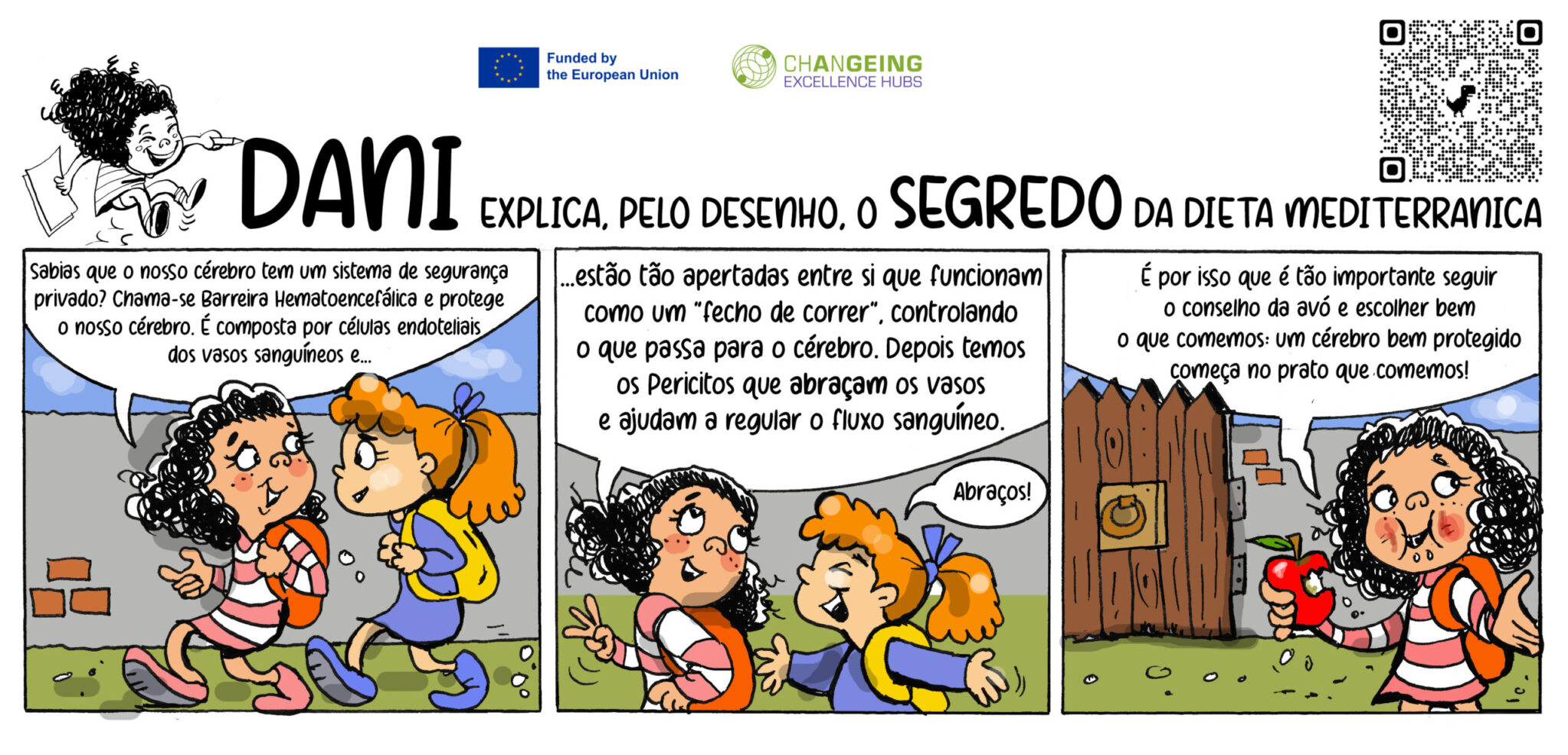
Imagine your brain is an elite metropolis, where the body’s most complex and vital processes occur. Like any high-value command center, the brain possesses an ultra-sophisticated security wall: the Blood-Brain Barrier. This structure is not just a passive wall; it is an intelligent customs system that decides what can enter (such as nutrients and oxygen) and what must stay out (toxins, bacteria, and viruses). However, as the years pass, this wall begins to show cracks. The culprit? A silent biological phenomenon known as cellular senescence. (1)

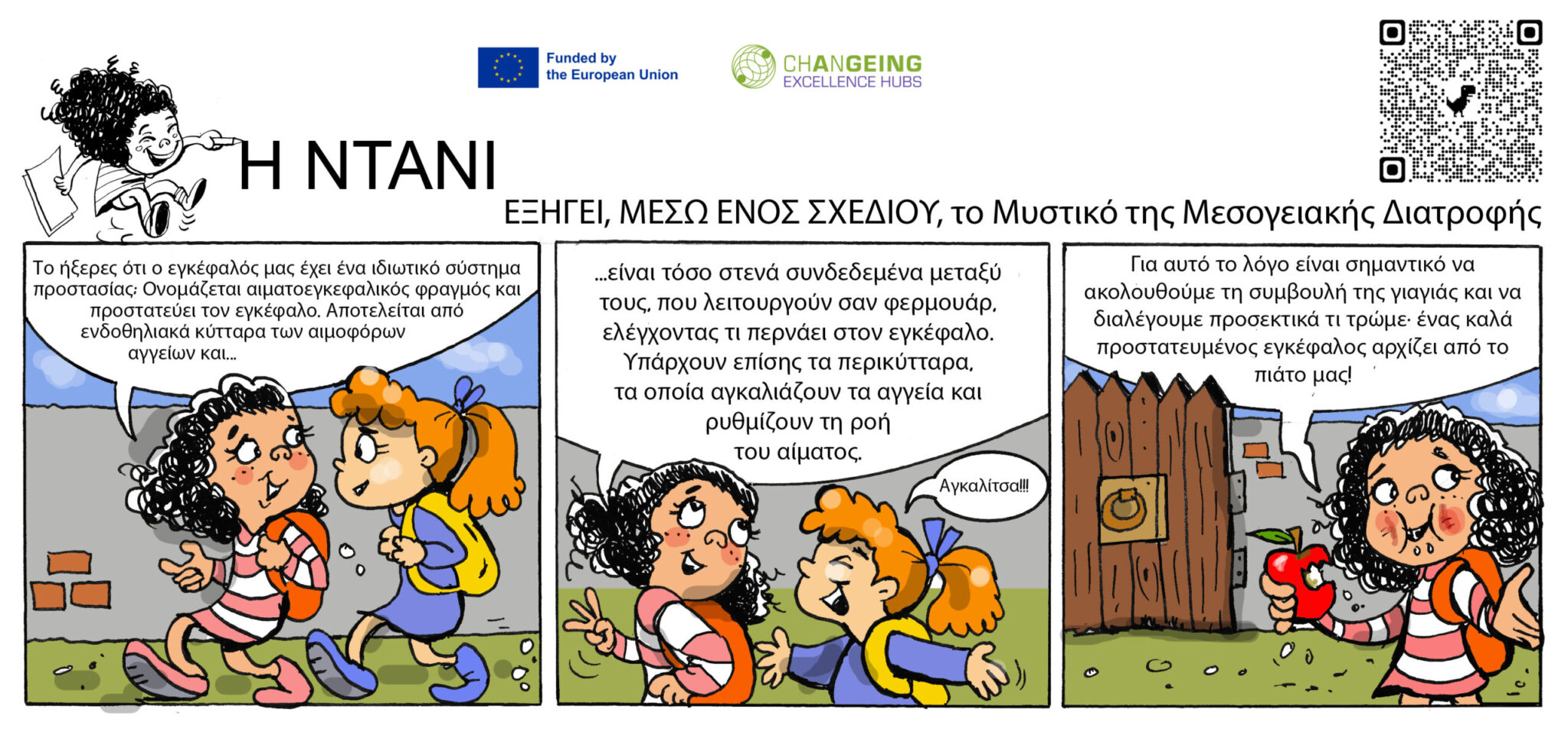
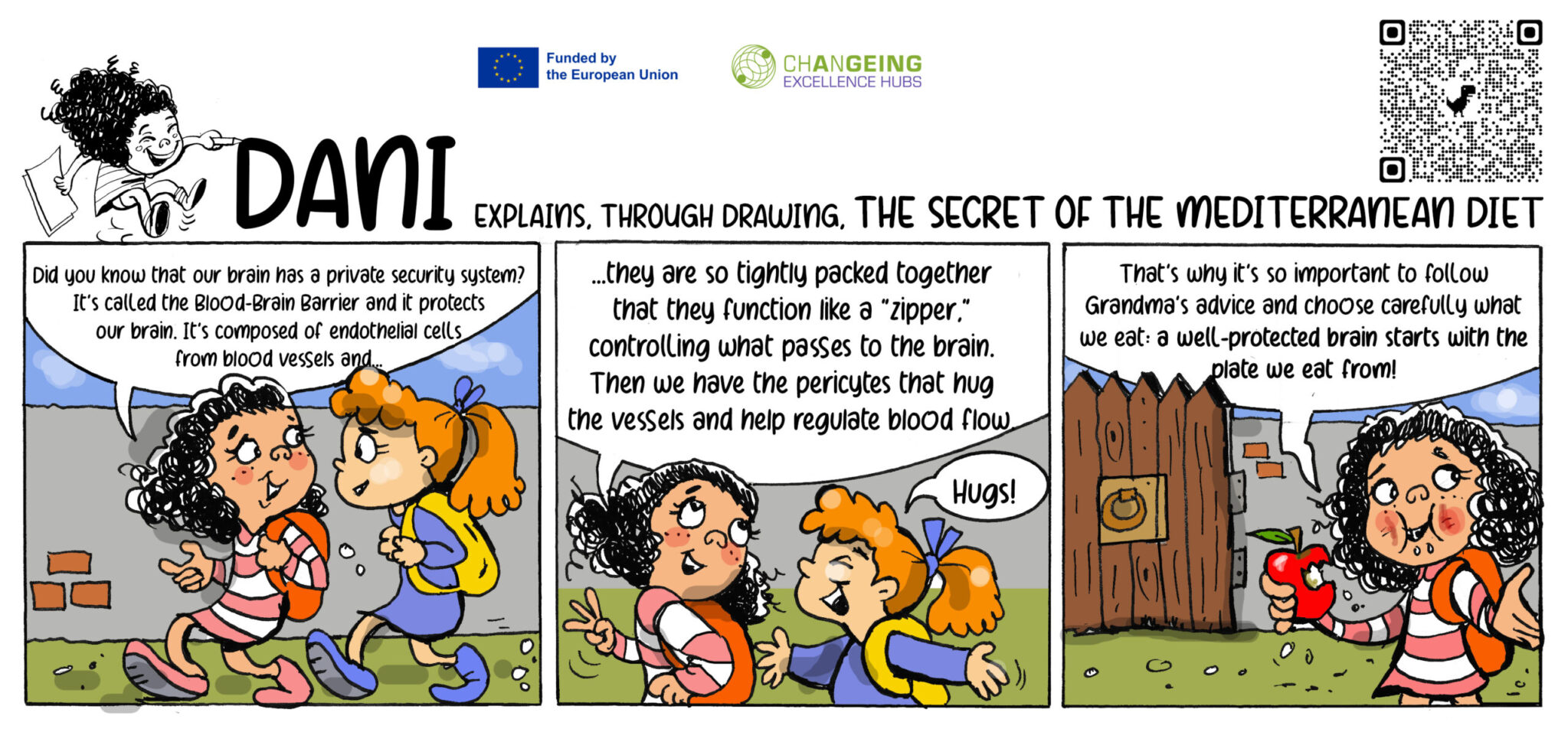
The Blood-Brain Barrier is a marvel of “natural bioengineering.” It separates the blood circulating in the body from the extracellular fluid that bathes our neurons and it selectively allows the passage of blood components that are important to maintain the survival and function of brain cells. This barrier is primarily composed of three types of cells working in harmony:
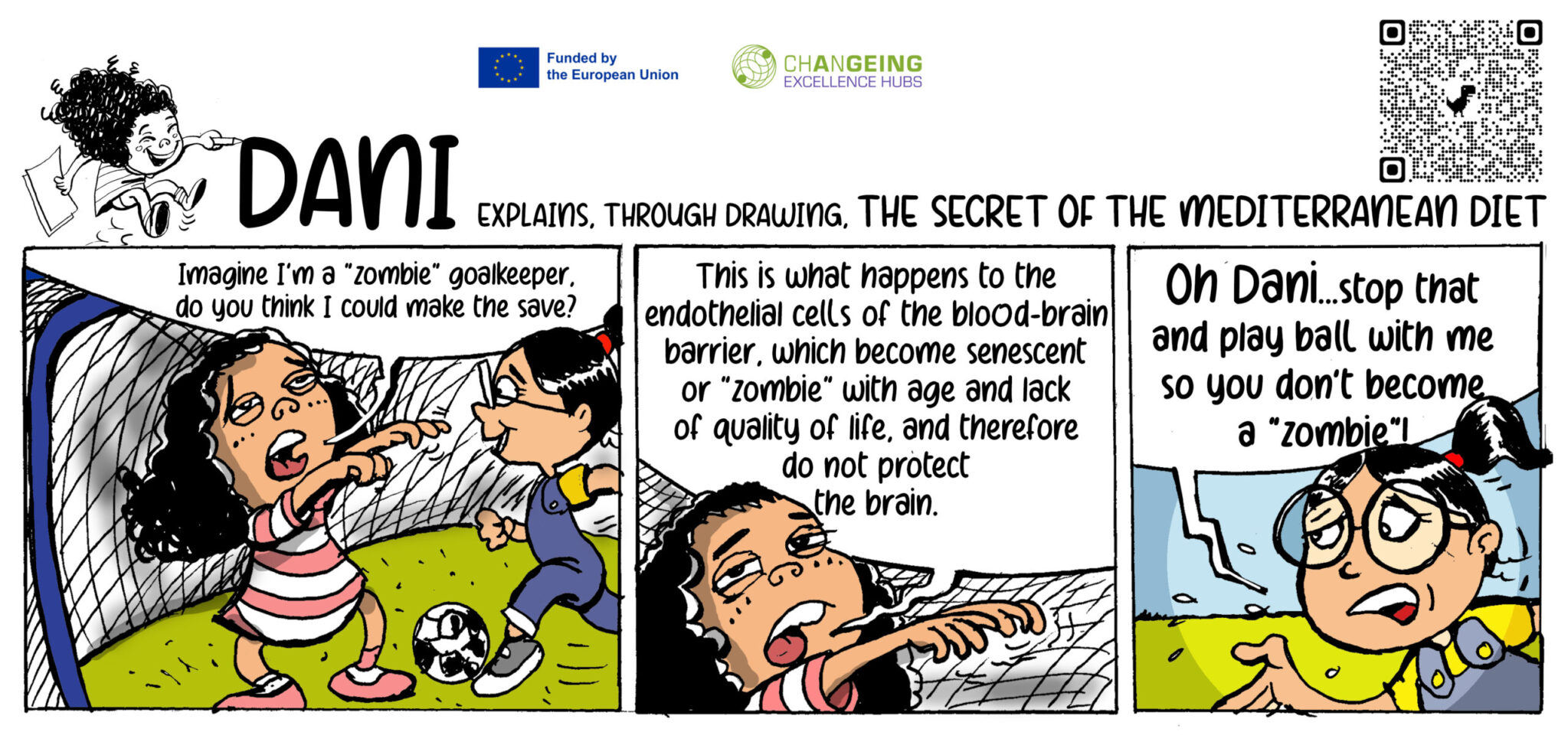
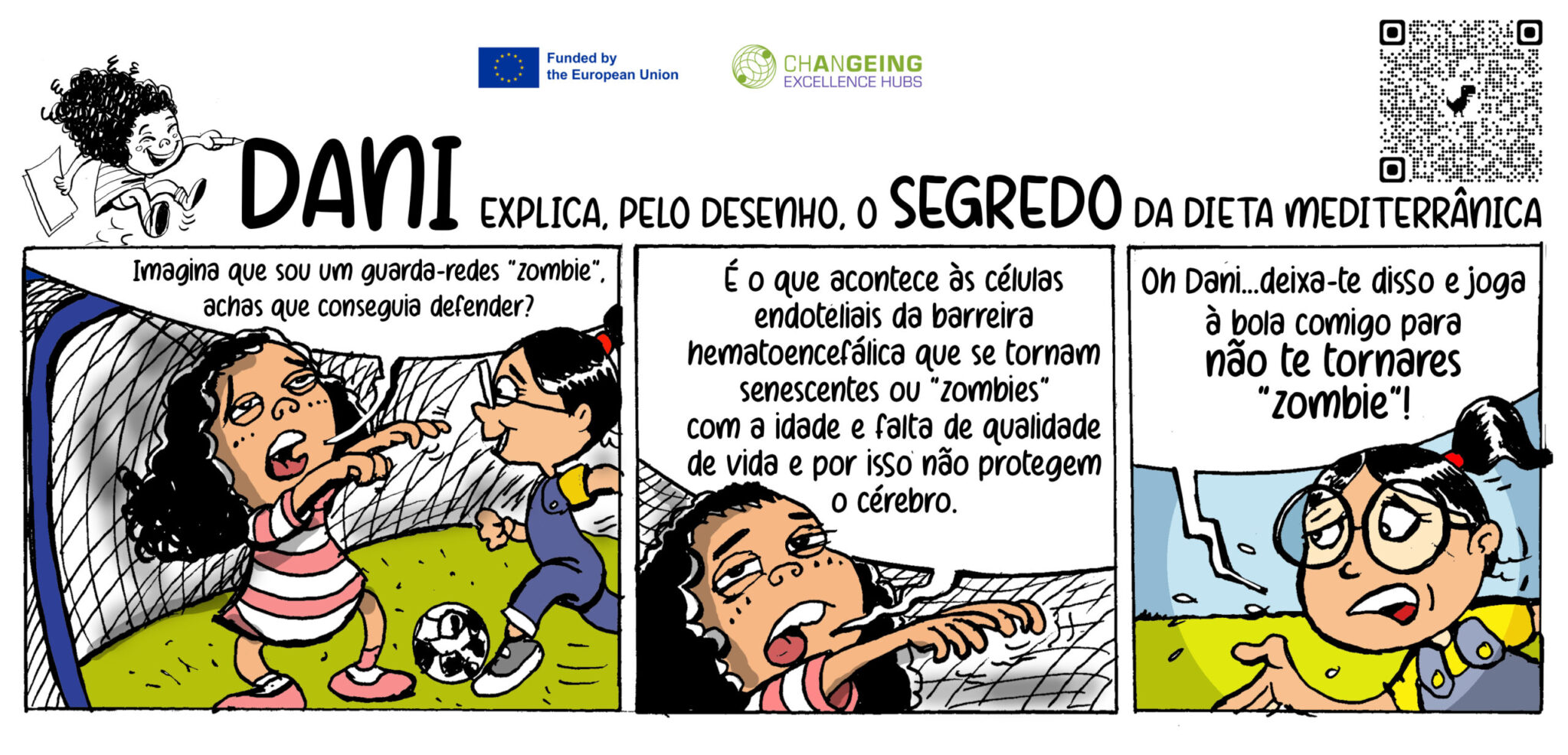
As we age, our bodies accumulate DNA damage and oxidative stress. In response, some endothelial cells enter a state of forced retirement: senescence (2). Senescent cells are often nicknamed “zombie cells.” They have stopped dividing (they do not renew), yet they refuse to die. The major problem is that these cells are particularly resistant to apoptosis—the natural process of programmed cell death that the body uses to eliminate old or damaged cells. Instead of disappearing quietly, these zombie cells remain active and become “noisy.” They secrete a cocktail of inflammatory chemicals. This chemical signal acts like a constant alarm cry that damages the healthy tissues around them.
When the endothelial cells of the blood-brain barrier become senescent, the impact is direct and physical. The cocktail of inflammatory chemicals secreted by senescent cells, along with internal changes within these cells, degrades the proteins that form the tight junctions. The “zipper” begins to open. With an excessively permeable barrier, unwanted substances that should be filtered out—such as heavy metals, metabolic byproducts, or even pathogens—manage to infiltrate brain tissue. This intrusion triggers chronic neuroinflammation. The brain, once a protected sanctuary, becomes a hostile environment for the neurons themselves, leading to a decline in memory, attention, and ultimately, overall cognitive function. Neurodegenerative diseases, such as Alzheimer’s, can then take hold. (3)
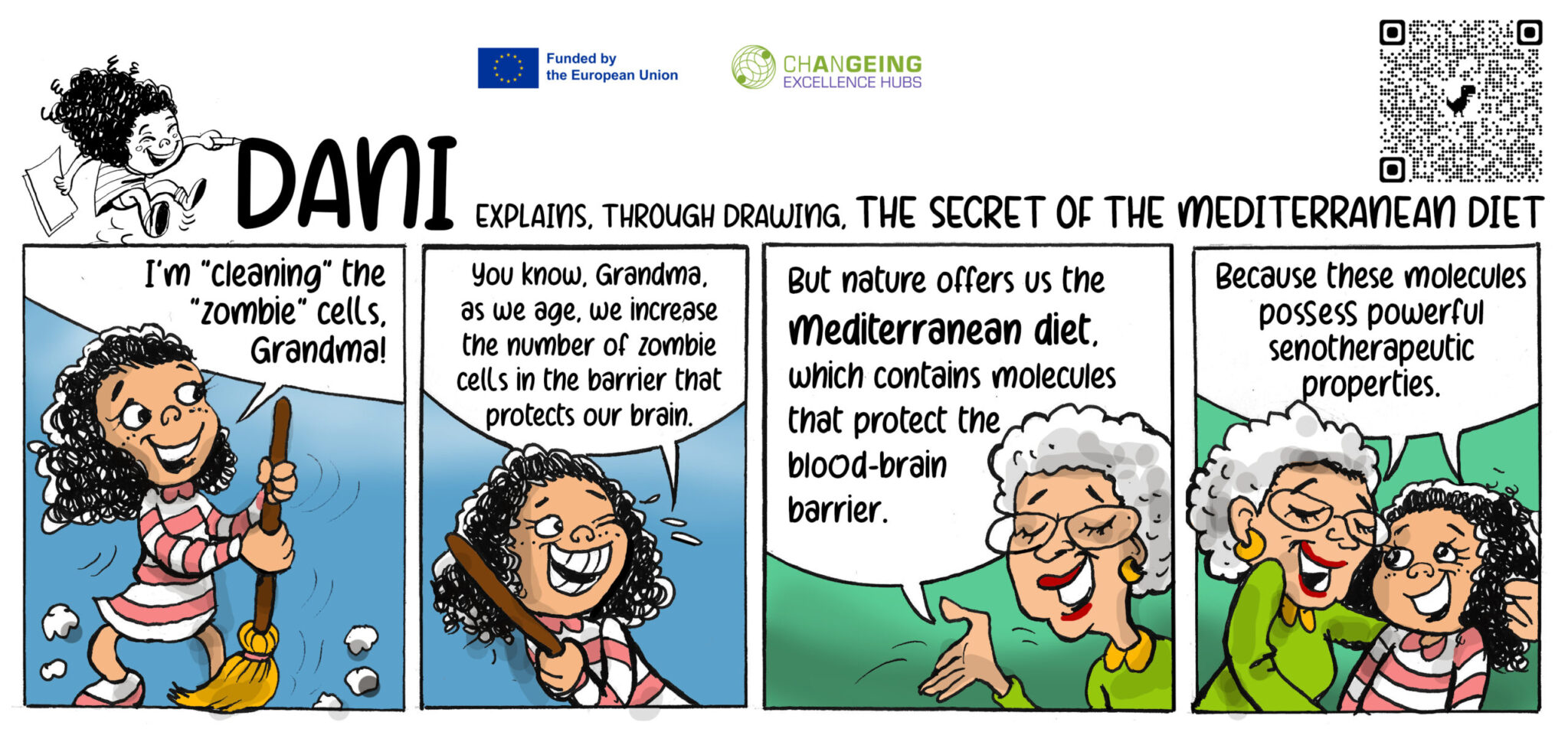
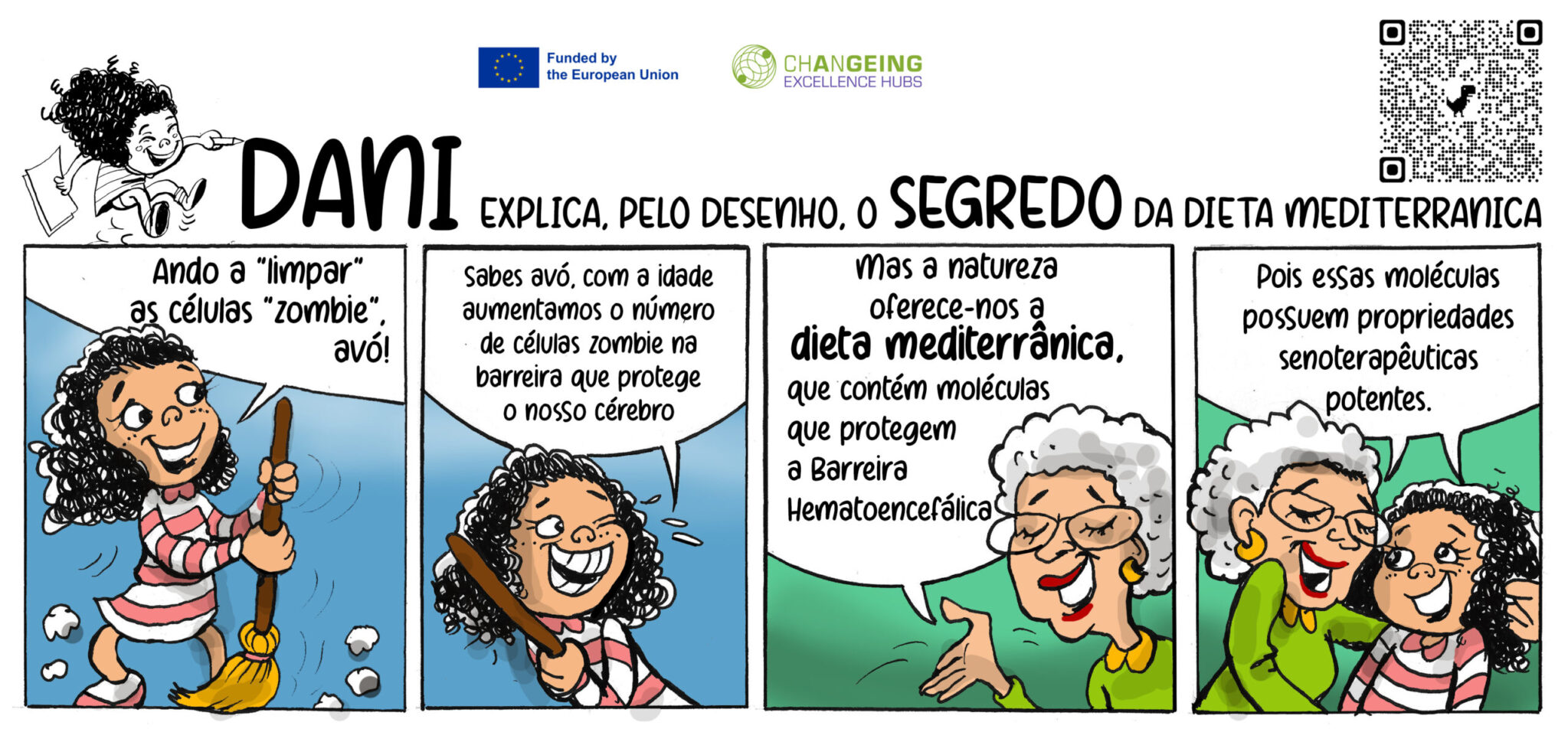
Modern science is testing a revolutionary approach: what if we could “clean up” these zombie cells to allow the wall to rebuild itself? This is where senotherapeutics come in (4). Senotherapeutics are molecules capable of identifying and inducing the selective death of senescent cells. Interestingly, nature already offers us some of these weapons. Recent studies indicate that certain molecules present in the Mediterranean diet (5) possess potent senotherapeutic properties.
One of the great challenges of medicine is specificity. Senescence is not inherently bad in all tissues; for instance, in the skin during wound healing, senescent cells are necessary to maintain homeostasis (balance). Current scientific advancement focuses on using molecules that are specific to brain endothelial cells. By directing the “attack” only at the zombie cells of the blood-brain barrier, we minimize side effects in other parts of the body that still need those cells to function correctly.
The application of these specific senotherapeutic compounds (2) has shown promising results. By reducing the number of senescent endothelial cells in the blood-brain barrier:
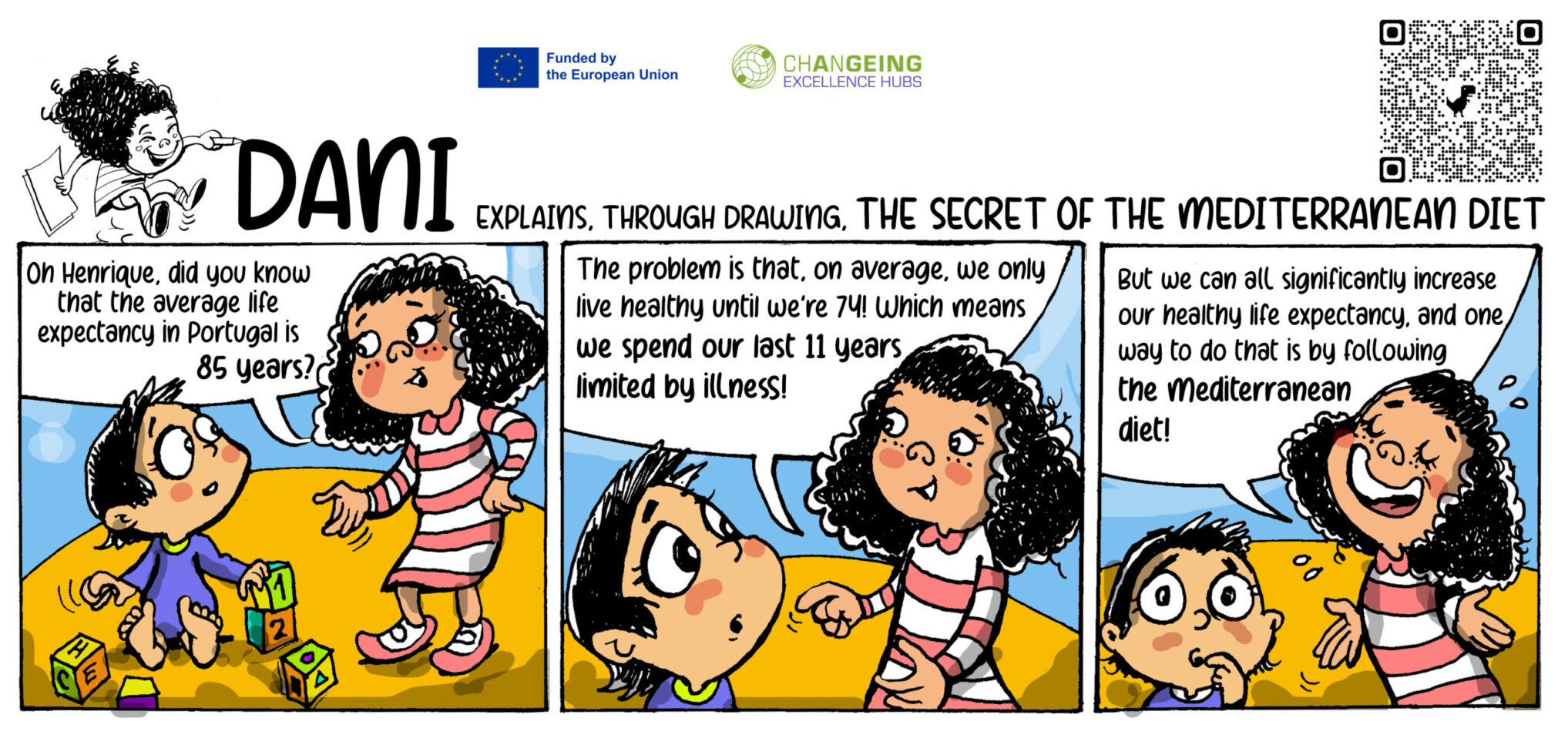
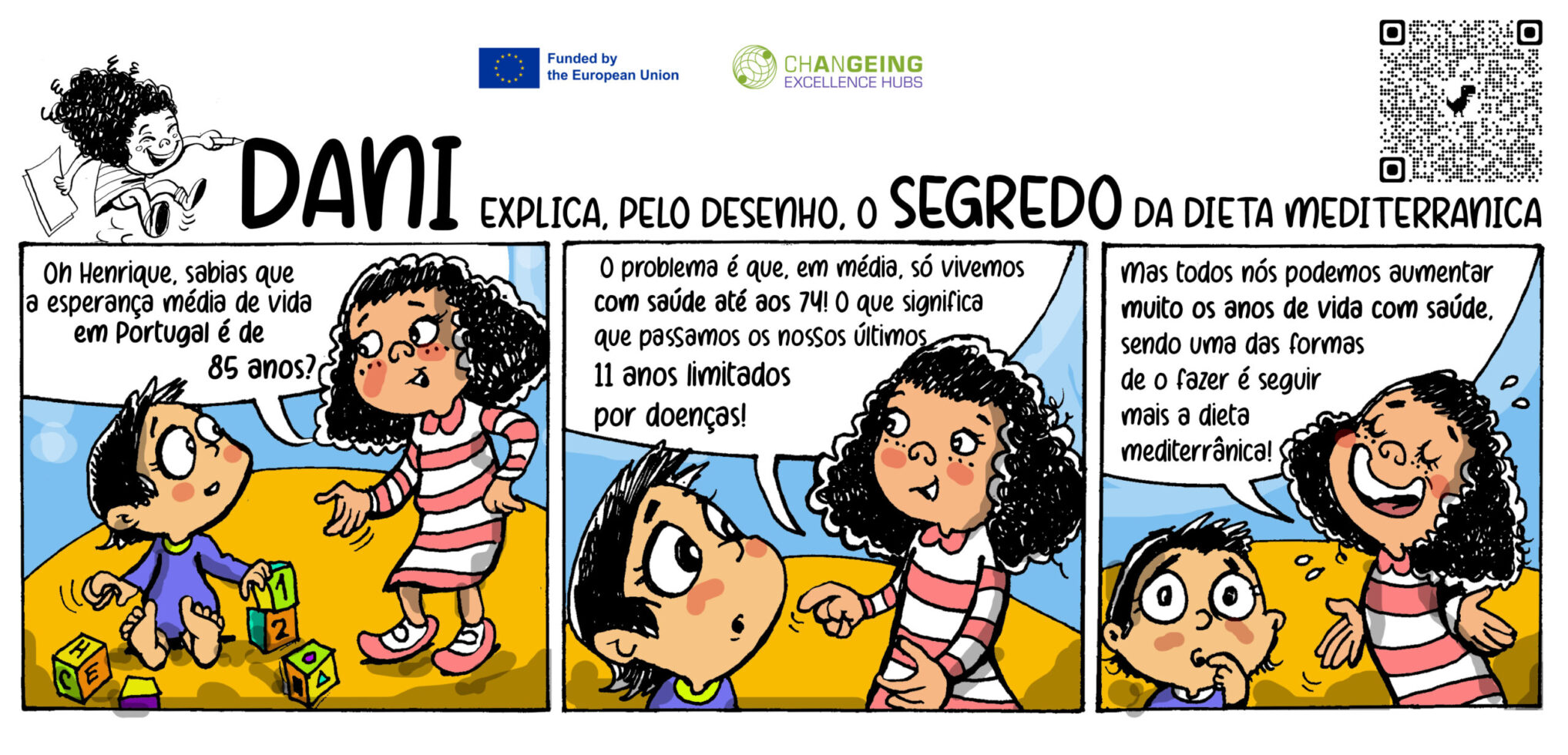
Aging and cognitive decline do not need to be seen as an inevitable downfall. By understanding that the health of our minds depends on the physical integrity of the barrier that protects them, we gain new tools to intervene. Through nutrition and the science of senotherapeutics, we are well on our way to learning not only how to live longer but how to ensure our “brain city” remains safe, clean, and functional until the final years of life, thereby increasing our quality of life. Life expectancy after age 65 in Portugal is about 20 years, but only about 8.4 of those years are lived in good health. We aim to increase healthy life years through the implementation of the Mediterranean diet. (6)
Authors: Lino ferreira and Luís Estronca
Design: José Gomes
Text: António Piedade
Imagine que o seu cérebro é uma metrópole de elite, onde ocorrem os processos mais complexos e vitais do organismo. Como qualquer centro de comando valioso, o cérebro possui uma muralha de segurança ultra-sofisticada: a Barreira Hematoencefálica. Esta estrutura não é apenas um muro passivo; é um sistema de alfândega inteligente que decide o que pode entrar (como nutrientes e oxigénio) e o que deve ficar de fora (toxinas, bactérias e vírus).
No entanto, com o passar dos anos, esta muralha começa a apresentar fissuras. O culpado? Um fenómeno biológico silencioso conhecido como senescência celular. (1)

A Barreira Hematoencefálica é uma maravilha da ‘bioengenharia natural’. Ela separa o sangue que circula no corpo do fluido extracelular que banha nossos neurônios e permite, seletivamente, a passagem de componentes sanguíneos que são importantes para manter a sobrevivência e a função das células cerebrais.
Esta barreira é composta principalmente por três tipos de células que trabalham em harmonia:
À medida que envelhecemos, o nosso corpo acumula danos no ADN e stress oxidativo. Em resposta, algumas células endoteliais entram num estado de reforma forçada: a senescência. (2)
As células senescentes são frequentemente apelidadas de células “zombie”. Elas pararam de se dividir (não se renovam), mas recusam-se a morrer. O grande problema é que estas células são particularmente resistentes à apoptose, o processo natural de morte celular programada que o corpo utiliza para eliminar células velhas ou danificadas.
Em vez de desaparecerem silenciosamente, estas células zombie permanecem ativas e tornam-se “barulhentas”. Elas segregam um cocktail de substâncias químicas inflamatórias. Este sinal químico funciona como um grito de alarme constante que danifica os tecidos saudáveis ao seu redor.
Quando as células endoteliais da barreira hematoencefálica se tornam senescentes, o impacto é direto e físico. O cocktail de substâncias químicas inflamatórias que as células senescentes secretam e as alterações internas nestas células degradam as proteínas que formam as junções muito apertadas. O “fecho de correr” começa a abrir-se.
Com a barreira excessivamente permeável, substâncias indesejadas que deveriam ser filtradas, como metais pesados, subprodutos metabólicos ou até patógenos, conseguem infiltrar-se no tecido cerebral. Esta intrusão gera uma neuroinflamação crónica. O cérebro, antes um santuário protegido, torna-se um ambiente hostil para os próprios neurónios, o que leva ao declínio da memória, da atenção e, em última análise, de toda a função cognitiva. Doenças neurodegenerativas, como a doença de Alzheimer, podem instalar-se. (3)
A ciência moderna está a testar uma abordagem revolucionária: e se pudéssemos “limpar” estas células zombie para permitir que a muralha se reconstrua? É aqui que entram os senoterapêuticos. (4)
Um dos grandes desafios da medicina é a especificidade. A senescência não é inerentemente má em alguns tecidos, como na pele durante a cicatrização, as células senescentes são necessárias para manter a homeostasia (o equilíbrio).
O avanço científico atual foca-se em utilizar moléculas que são específicas para as células endoteliais cerebrais. Ao direcionar o “ataque” apenas para as células zombie da barreira hematoencefálica, minimizamos os efeitos secundários noutras partes do corpo que ainda precisam dessas células para funcionar corretamente.
A aplicação destes compostos senoterapêuticos específicos (2) tem demonstrado resultados promissores. Ao reduzir o número de células endoteliais senescentes na barreira hematoencefálica:
Esta restauração da “fronteira” cerebral poderá ter um impacto profundo na recuperação da função cognitiva. Ao devolver ao cérebro o ambiente limpo e estável de que ele necessita, os neurónios podem voltar a comunicar de forma eficaz. (4)
O envelhecimento e o declínio cognitivo não precisam de ser vistos como uma queda inevitável. Ao compreendermos que a saúde da nossa mente depende da integridade física da barreira que a protege, ganhamos novas ferramentas para intervir. Através da alimentação e da ciência dos senoterapêuticos, estamos no bom caminho de aprender não só a viver mais tempo, mas a garantir que a nossa “cidade cerebral” permanece segura, limpa e funcional até aos últimos anos de vida, aumentando assim a nossa qualidade de vida. A esperança de vida após os 65 anos em Portugal é de cerca de 20 anos, mas apenas cerca de 8,4 anos destes são vividos com saúde. Pretendemos aumentar os anos vividos com saúde com a implementação da dieta mediterrânica. (6)
Autores: Lino Ferreira e Luís Estronca
Design: José Gomes
Texto: António Piedade
Φανταστείτε τον εγκέφαλό σας σαν μια πολύπλοκη, καλά οργανωμένη μητρόπολη, όπου εκτελούνται με ακρίβεια οι πιο κρίσιμες λειτουργίες του σώματος. Όπως κάθε σημαντικό κέντρο, έτσι και ο εγκέφαλος προστατεύεται από ένα εξαιρετικά εξελιγμένο σύστημα ασφαλείας: τον αιματοεγκεφαλικό φραγμό. Ο φραγμός αυτός δεν είναι ένα απλό, παθητικό τείχος. Πρόκειται για ένα δυναμικό και «έξυπνο» σύστημα ελέγχου, που ρυθμίζει με ακρίβεια τι επιτρέπεται να εισέλθει στον εγκέφαλο —όπως οξυγόνο και θρεπτικά συστατικά— και τι πρέπει να αποκλειστεί, όπως τοξίνες και παθογόνοι μικροοργανισμοί. Με την πάροδο του χρόνου, όμως, το τείχος εμφανίζει ρωγμές και η προστασία αρχίζει να φθείρεται. Ο ένοχος; Ένα σιωπηλό αλλά καθοριστικό βιολογικό φαινόμενο: η κυτταρική γήρανση. (1)
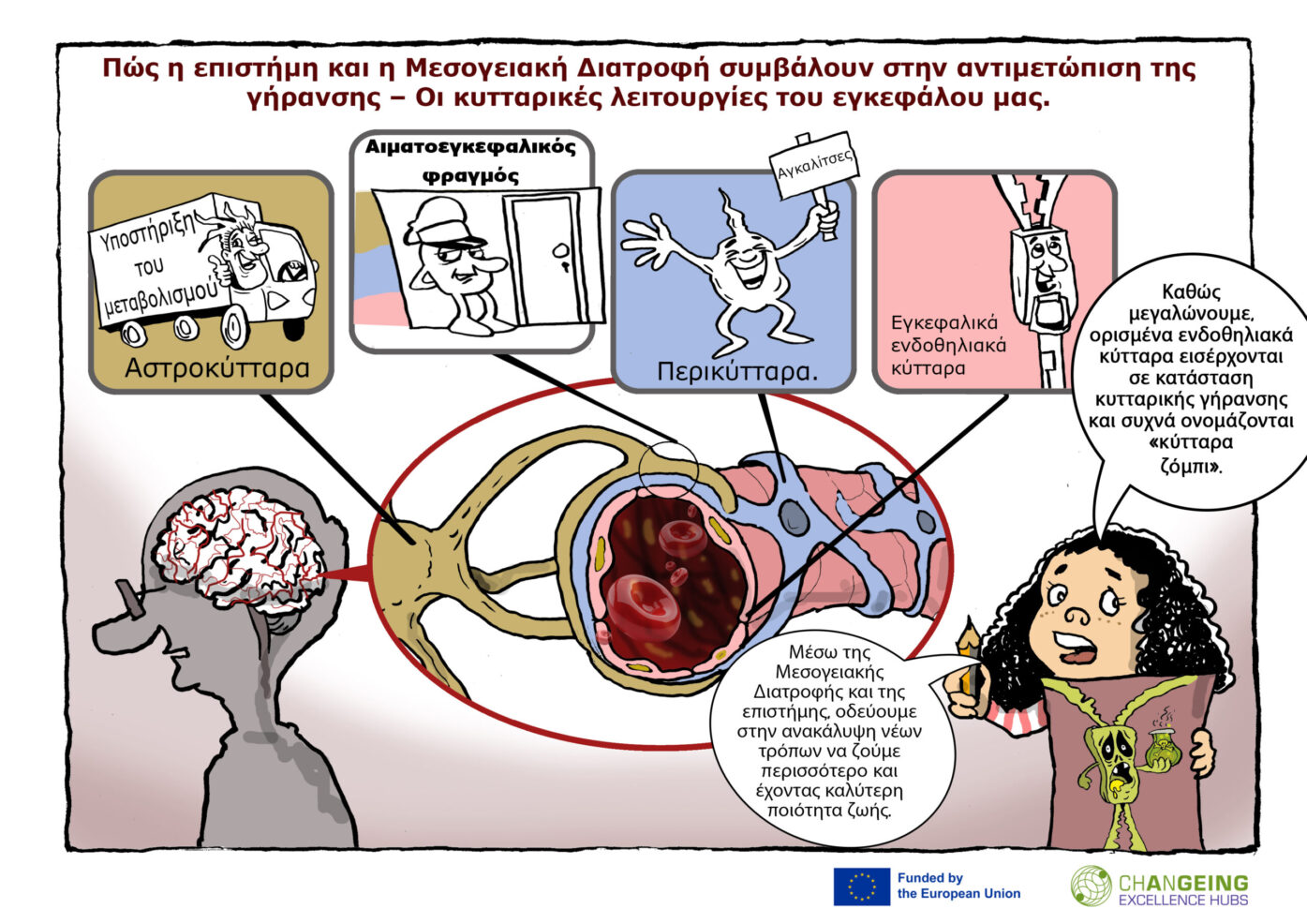
Ο αιματοεγκεφαλικός φραγμός αποτελεί ένα εντυπωσιακό παράδειγμα βιολογικής οργάνωσης. Διαχωρίζει το αίμα από το υγρό που περιβάλλει τα εγκεφαλικά κύτταρα και επιτρέπει επιλεκτικά τη διέλευση ουσιών που είναι απαραίτητες για τη λειτουργία τους. Η δομή του αιματοεγκεφαλικού φραγμού βασίζεται στη συνεργασία τριών βασικών τύπων κυττάρων:
Με την ηλικία, τα κύτταρα του οργανισμού συσσωρεύουν βλάβες, όπως φθορές στο DNA και οξειδωτικό στρες. Ορισμένα από αυτά εισέρχονται σε μια κατάσταση που ονομάζεται κυτταρική γήρανση (2). Τα κύτταρα αυτά συχνά περιγράφονται ως «ζόμπι»: δεν διαιρούνται πλέον (δεν ανανεώνονται), αλλά ούτε και απομακρύνονται από τον οργανισμό καθώς είναι ανθεκτικά στη φυσιολογική διαδικασία κυτταρικού θανάτου (απόπτωση). Το πρόβλημα δεν είναι μόνο ότι παραμένουν — αλλά ότι γίνονται επιβλαβή. Εκκρίνουν φλεγμονώδεις ουσίες που διαταράσσουν το περιβάλλον γύρω τους, λειτουργώντας ως ένας συνεχής «συναγερμός» που βλάπτει τους υγιείς ιστούς.
Η συσσώρευση γηρασμένων εγκεφαλικών ενδοθηλιακών κυττάρων στον αιματοεγκεφαλικό φραγμό έχειάμεσες συνέπειες. Οι φλεγμονώδεις ουσίες που εκκρίνουν, σε συνδυασμό με εσωτερικές κυτταρικές αλλαγές, αποικοδομούν τις πρωτεΐνες που συγκροτούν τις στενές συνδέσεις. Με απλά λόγια, το «φερμουάρ» αρχίζει να ανοίγει. Όταν ο φραγμός χάνει τη στεγανότητά του, ουσίες που κανονικά θα αποκλείονταν —όπως τοξίνες, μεταβολικά κατάλοιπα ή παθογόνα— μπορούν να εισέλθουν στον εγκεφαλικό ιστό. Το αποτέλεσμα είναι χρόνια φλεγμονή. Έτσι, ο εγκέφαλος μετατρέπεται σταδιακά από προστατευμένο καταφύγιο σε εχθρικό περιβάλλον ακόμη και για τους ίδιους τους νευρώνες, οδηγώντας σε προβλήματα μνήμης, συγκέντρωσης και συνολική επιδείνωση της γνωστικής λειτουργίας. Νευροεκφυλιστικές νόσοι, όπως η νόσος Αλτσχάιμερ κάνουν την εμφάνισή τους. (3)
Η σύγχρονη έρευνα εξετάζει μια καινοτόμο ιδέα: τι θα γινόταν αν μπορούσαμε να απομακρύνουμε επιλεκτικά τα γηρασμένα κύτταρα ζόμπι; Σε αυτό το πλαίσιο αναπτύσσονται τα λεγόμενα σενοθεραπευτικά (4) — ουσίες που μπορούν να εντοπίζουν και να εξαλείφουν τα «κύτταρα ζόμπι». Ιδιαίτερο ενδιαφέρον παρουσιάζει το γεγονός ότι ορισμένες τέτοιες ουσίες φαίνεται να υπάρχουν ήδη στη φύση. Πρόσφατες μελέτες δείχνουν ότι συστατικά της Μεσογειακής Διατροφής (5) διαθέτουν ισχυρές σενοθεραπευτικές ιδιότητες.
Η κυτταρική γήρανση δεν είναι πάντα επιβλαβής. Σε ορισμένες περιπτώσεις, όπως στην επούλωση τραυμάτων, τα γηρασμένα κύτταρα παίζουν χρήσιμο ρόλο, καθώς είναι απαραίτητα για τη διατήρηση της ομοιόστασης (ισορροπίας). Για το λόγο αυτό, η στοχευμένη παρέμβαση αποτελεί μία από τις μεγαλύτερες προκλήσεις της ιατρικής. Οι σύγχρονες επιστημονικές προσεγγίσεις εστιάζουν στη χρήση ουσιών που στοχεύουν μόνο τα επιβλαβή γηρασμένα κύτταρα του εγκεφάλου, χωρίς να επηρεάζουν άλλους ιστούς. Στοχεύοντας μόνο τα «κύτταρα ζόμπι» του αιματοεγκεφαλικού φραγμού ελαχιστοποιούμε τις παρενέργειες σε άλλα μέρη του σώματος όπου τα κύτταρα αυτά είναι χρήσιμα.
Τα πρώτα ερευνητικά δεδομένα από τη χρήση σενοθεραπευτικών ουσιών είναι ενθαρρυντικά (2). Η μείωση του αριθμού των γηρασμένων εγκεφαλικών ενδοθηλιακών κυττάρων στον αιματοεγκεφαλικό φραγμό φαίνεται να οδηγεί σε:
Με την αποκατάσταση αυτού του «προστατευτικού συνόρου», ο εγκέφαλος μπορεί να επανέλθει σε ένα πιο σταθερό και υγιές περιβάλλον, επιτρέποντας στα νευρικά κύτταρα να λειτουργούν αποτελεσματικά. (4)
Η απώλεια της γνωστικής λειτουργίας δεν αποτελεί αναπόφευκτη συνέπεια της γήρανσης. Η κατανόηση του ρόλου του αιματοεγκεφαλικού φραγμού για τη διατήρηση της υγείας του εγκεφάλου ανοίγει νέους δρόμους πρόληψης και παρέμβασης. Ο συνδυασμός διατροφικών προσεγγίσεων – όπως η Μεσογειακή Διατροφή – και επιστημονικής προόδου στον τομέα των σενοθεραπευτικών, δημιουργεί προοπτικές όχι μόνο για μεγαλύτερη διάρκεια ζωής, αλλά και για περισσότερα χρόνια με καλή εγκεφαλική υγεία. Ο στόχος πλέον δεν είναι απλώς να ζούμε περισσότερο, αλλά να επιτύχουμε περισσότερα χρόνια με καλύτερη ποιότητα ζωής μέσω της Μεσογειακής Διατροφής.